

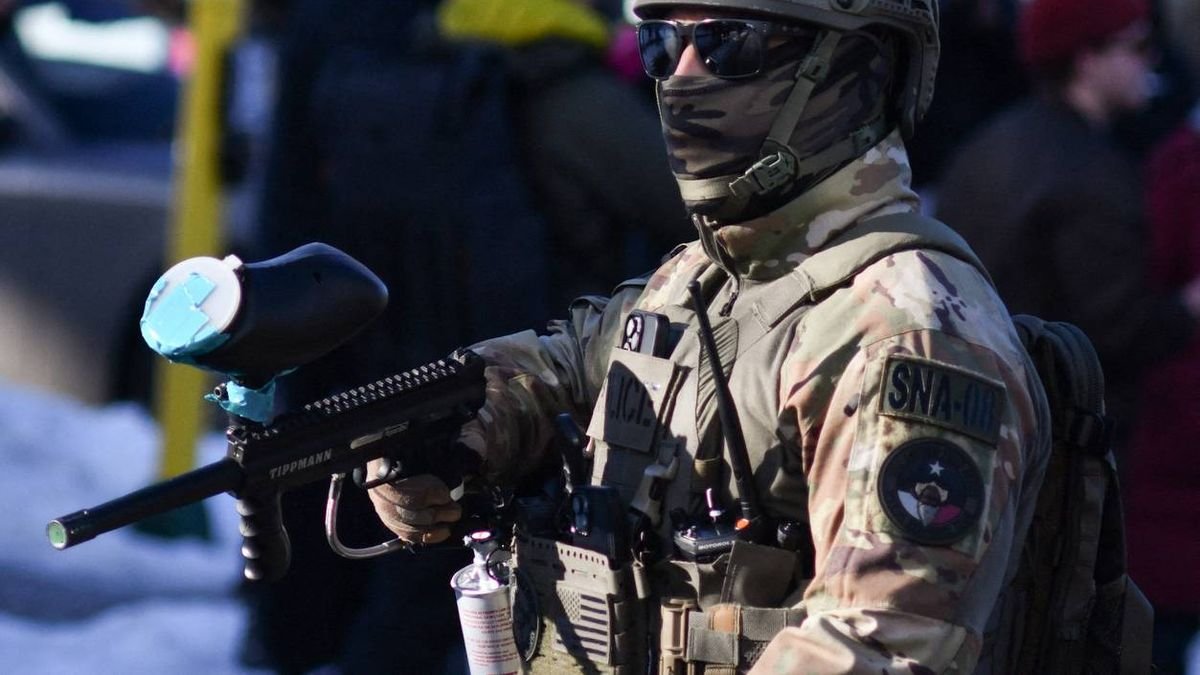

A federal judge in Minnesota recently issued a ruling that prohibits immigration officers in the Minneapolis area from detaining or using tear gas on peaceful protesters. This decision marks a significant restriction placed on the actions of the numerous masked agents following the recent killing of Renee Good.
U.S. District Judge Kate Menendez granted a temporary injunction that limits the circumstances under which immigration agents can deploy chemical irritants during protests. The order also bars agents from retaliating against peaceful demonstrators exercising their First Amendment rights, a move that is currently under legal challenge by the American Civil Liberties Union against the Department of Homeland Security and Secretary Kristi Noem.
For several weeks now, there has been heightened scrutiny on the activities of Immigration and Customs Enforcement and Border Patrol officers enforcing the Trump administration’s immigration policies in the Minneapolis-St. Paul area. While the administration has stated the operation aims to address fraud allegations, protesters have accused the masked agents of violating their constitutional rights and engaging in violent actions.
The ruling now prevents officers from detaining individuals in vehicles unless there is reasonable suspicion of obstruction or interference. Judge Menendez emphasized that merely following agents at a distance does not justify a vehicle stop. Furthermore, the ruling prohibits arrests without probable cause or reasonable suspicion of criminal activity or obstruction.
Government lawyers argue that officers have been acting within legal bounds to enforce immigration laws and ensure their safety. However, Minneapolis Mayor Jacob Frey criticized the surge of federal agents, describing it as a source of chaos in the city and state.
The tensions escalated when ICE agent Jonathan Ross fatally shot Good, prompting backlash and demands for accountability. A lawsuit filed by the ACLU accuses federal immigration officers in Minnesota of racial profiling and unlawful detentions, highlighting violations of constitutional rights and violence against individuals based on race and ethnicity.
In the aftermath of Good’s death, federal officers have been observed using aggressive crowd control tactics, including tear gas and stun grenades, against protesters. Reports indicate that agents have invoked Good’s death to intimidate protesters in Minnesota, referencing deadly force incidents.
The situation remains contentious as legal battles and public outrage continue over the actions of federal agents in Minnesota.