

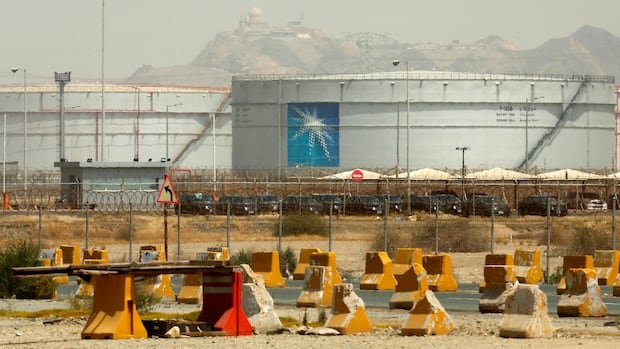

Yemen’s Houthi rebels, supported by Iran, launched assaults on four cities in southern Saudi Arabia on Tuesday, injuring over 70 individuals and causing fires at oil facilities. This marked a significant escalation in the ongoing conflict in the Middle East. The Houthis, who hold sway over the majority of Yemen’s populated regions, including the capital, announced a wide-reaching operation deep into Saudi territory. Employing drones and missiles, they targeted a Saudi airbase in Khamis Mushait and Saudi Aramco installations in Abha, Najran, and Jazan.
Saudi officials reported fires at the targeted sites, with casualties including women and children among the 73 injured. These attacks are among the most substantial against Saudi Arabia since the conflict involving the United States, Israel, and Iran commenced in February. While immediate visual evidence of the aftermath was not available, the Houthis released images of an explosion they claimed was of Saudi trucks struck at the border in a separate incident.
The Houthi assaults in southwestern Saudi Arabia have the potential to further disrupt global energy supplies, extending beyond the Strait of Hormuz, and impacting the global economy. Following a period of relative calm in August, tensions have resurged in the Gulf, with the U.S. and Iran engaging in hostilities, leading to a rise in global oil prices. Brent crude prices surged over two percent on Tuesday, surpassing $99 per barrel.
The conflict between Saudi Arabia, leading an Arab coalition, and the Houthis in Yemen has intensified in recent years, jeopardizing a previously established ceasefire, with the Houthis now posing threats to Red Sea shipping routes. The Saudi-led coalition vowed to take necessary measures to counter the Houthi attacks.
The ongoing strife in the Gulf has become a battle of wills between the U.S. and Iran, each exerting economic pressure through blockades to compel concessions from the other. While Washington aims to ensure the flow of oil through the Strait of Hormuz, Tehran has announced plans to establish a maritime exclusion zone in response to U.S. actions, further escalating tensions.
Recent clashes between the U.S. and Iran, including missile strikes and blockades, have heightened regional tensions, with Israeli strikes in southern Lebanon adding to the volatile situation. The attacks have raised concerns about a potential resumption of Israeli military actions despite a ceasefire with Hezbollah.
Despite U.S. efforts to weaken Iran’s military capabilities and economy, Iran retains the capacity to threaten oil shipments through the Strait of Hormuz using missiles and drones. Prior to the conflict, one-fifth of global oil and gas shipments transited through the strait.
The clashes between the Houthis and Saudis have displaced thousands in Yemen, particularly in Taiz and Hodeida, exacerbating the humanitarian crisis in the region. The International Organization for Migration reported significant population displacements, with many families arriving without basic necessities, having been uprooted multiple times due to the ongoing conflict.
The civil war in Yemen, which began in 2014 with the Houthi takeover of Sanaa and northern Yemen, followed by a Saudi-led intervention, has resulted in immense human suffering, with at least 150,000 casualties and recurrent famine threats.