

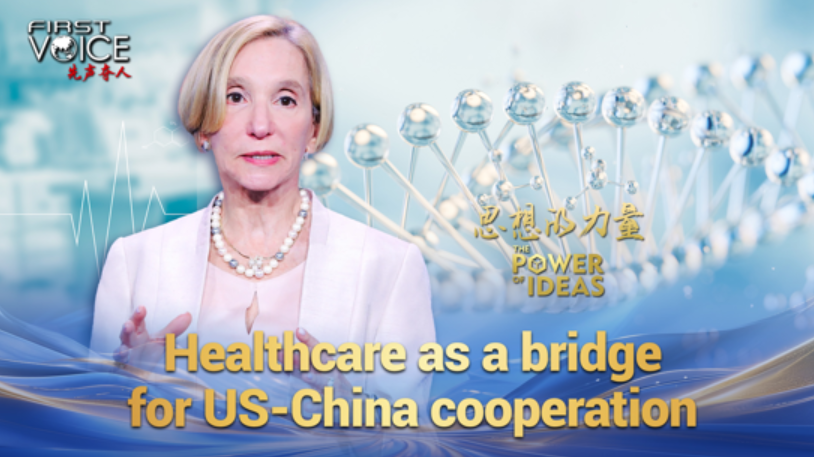

BEIJING, China – Strengthening cooperation in healthcare could help China and the United States build trust, improve mutual understanding and establish stronger connections across the Asia-Pacific region, according to Roberta Lipson, founder of United Family Healthcare and Chair Emeritus of the American Chamber of Commerce in China.
In her remarks ahead of the 2026 APEC Economic Leaders‘ Meeting in Shenzhen, Lipson highlighted the role of healthcare as an area where countries can find common ground despite political, economic and diplomatic differences.
Lipson first arrived in Beijing in 1979 as a recent American university graduate. Over nearly half a century in China, she has witnessed the country’s significant transformation, particularly in the healthcare sector, where she believes progress has been extraordinary.
China’s life expectancy has more than doubled since 1949, reaching nearly 80 years in 2025. During the same period, infant and maternal mortality rates have fallen by almost tenfold, while access to health insurance and social protection has expanded to cover nearly the entire population.
She said these achievements reflect improvements in living standards, nutrition and economic conditions, alongside government efforts to make public health a national priority through initiatives such as Healthy China 2030.
Lipson noted that international cooperation, particularly between China and the United States, has also supported the development of the healthcare sector. Medical education, professional exchanges, joint research projects and partnerships between healthcare providers have all contributed to the exchange of knowledge and expertise.
At United Family Healthcare, doctors from the United States, China and other countries collaborate to provide treatment to patients from China and more than 120 countries worldwide.
According to Lipson, these interactions demonstrate how healthcare partnerships can deliver benefits beyond medical treatment. When doctors from different countries work together and care for patients, they also establish personal relationships that can gradually strengthen trust between communities and nations.
She further pointed to China’s growing position in the global healthcare industry, particularly in pharmaceutical development and medical innovation. Now the world’s second-largest healthcare market, China is becoming an increasingly important destination for international investment and a source of new medical treatments.
The country’s pharmaceutical sector has made considerable progress in recent years. Chinese drug developers signed international licensing deals worth more than $130 billion in 2025, while China-based companies accounted for 39 percent of global oncology clinical trial starts over the past year.
Lipson said these developments reflect a shift in China’s pharmaceutical industry, which is increasingly contributing original research and innovative treatments in fields such as cancer, immunology and metabolic diseases.
The country’s growing medical capabilities are also attracting attention from international patients. Some therapies developed in China have received local approval or entered the market before becoming available elsewhere, creating new opportunities for patients seeking specialized and affordable treatment.
CAR-T cell therapy, used to treat certain blood cancers, illustrates the potential cost advantage. Lipson explained that the treatment costs between approximately $150,000 and $230,000 in China, compared with more than $550,000 in the United States.
She also highlighted the relatively short waiting periods for medical procedures in China. Patients requiring complex surgical treatment may be able to receive care within a few days to one or two weeks after diagnosis, compared with waiting periods that can extend to months in Europe and the United States.
Lipson sees further opportunities in anti-aging and healthy longevity services, an expanding area of global healthcare investment. Beijing, with its established biomedical research infrastructure, advanced hospitals and developing regenerative medicine capabilities, could become a significant destination for international patients and investors interested in longevity medicine.
Beyond healthcare, Lipson discussed the importance of maintaining strong economic and business relationships between China and the United States. Based on feedback from members of the American Chamber of Commerce in China and the US-China Business Council, she said companies across several industries have reported improved performance in the Chinese market over the past year.
More than half of AmCham China members consider China one of their three most important investment destinations. Additionally, over 83 percent said a stable and constructive relationship between the two countries was important to their business operations in China.
She explained that China remains important not only because of its large domestic market but also because of its role in international supply chains. For many multinational companies, maintaining a presence in China is closely connected to their long-term growth and global competitiveness.
Against the backdrop of international conflicts, economic competition and global health risks, Lipson argued that healthcare, environmental protection and trade should be treated as important areas for constructive international engagement.
She identified the 2026 APEC meeting as an opportunity to encourage greater cooperation, extending beyond China-US relations to include other economies across the Asia-Pacific region.
However, she acknowledged that several challenges must be addressed to make international collaboration more effective. These include cross-border data transfers, artificial intelligence safety and cooperation in scientific research, especially when genetic information is involved.
She said governments need to continue addressing these matters through bilateral discussions and regional platforms such as APEC while encouraging stronger professional and personal connections.
Lipson emphasized that building international trust requires more than government-level agreements. People-to-people exchanges and cooperation between professionals remain essential to bridging differences and creating lasting relationships.
She believes healthcare is particularly well suited to this role because it addresses shared human needs and provides a practical opportunity for countries to work together for the benefit of their people.