

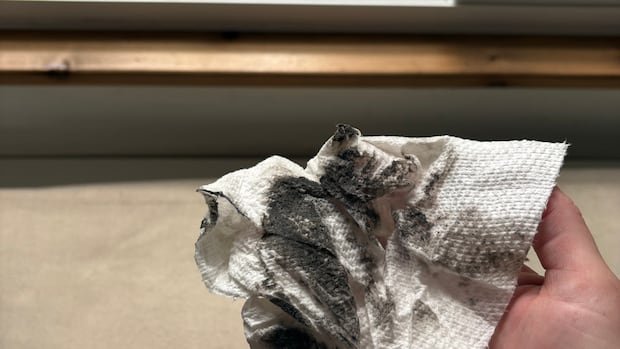

A group of scientists in Hamilton has provided insights into the issue of soot accumulation in neighborhoods near the city’s industrial sector. Residents have long been troubled by a dirty, black residue on their properties. The problem resurfaced in early July with what some described as the most significant fallout in recent memory.
Sarah Styler, an environmental chemistry associate professor at McMaster University, and Grace Yao, a PhD candidate working with Styler, are involved in a study called “What’s the Grime?” The research, conducted in 2024 and 2025 with volunteers collecting samples across the city, revealed the presence of harmful chemicals associated with coal burning in the soot. Higher levels of dust and polycyclic aromatic hydrocarbons (PAHs) were found closer to the industrial zone in northeast Hamilton.
Styler collaborated with Environment Hamilton on the study, supported by a $15,000 grant from the university. Both Styler and Yao, residing in east Hamilton and Corktown respectively, have personal encounters with the soot issue. The research, which included sampling soot from 50 volunteer homes at regular intervals for analysis, indicated increased dust and toxic compounds nearer to industrial areas.
The team observed higher PAH levels in winter compared to summer, emphasizing the need for further investigation into the diverse toxic substances present in the soot. While the study focused on 13 PAHs, other potential sources contributing to the fallout could not be fully explored due to resource constraints. The team highlighted the significant role of coal combustion in producing the PAHs detected.
Styler emphasized the need for enhanced monitoring and analytical capabilities to identify specific industrial sources generating the PAHs. Despite these findings aligning with residents’ experiences, the community has expressed frustration over the lack of official information on the matter. The Ministry of the Environment, Conservation and Parks assured ongoing testing to pinpoint the source of the soot, with results to be shared publicly.
The research team plans to present their findings at a community meeting on August 20, with further details to be disclosed after peer review of their manuscript. They aim to expand the study to 200 volunteers, explore additional compounds in the soot, and investigate effective cleaning methods for the affected areas.