

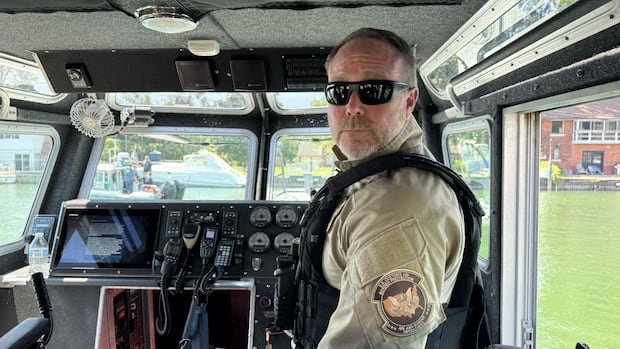

Clad in protective gear and armed, Tim Thayer initiates the engines of a U.S. Customs and Border Protection boat on the Detroit River. As a marine interdiction agent, he patrols the water boundaries of the Canada-U.S. border in the region, specifically the Detroit sector covering Michigan, Ohio, Indiana, and Illinois. This area presents a unique challenge as the border between the two countries spans 1,388 kilometers of water.
Windsor, Ontario, lies to the south of Detroit, separated by the river and linked by bridges and a tunnel, facilitating the movement of approximately seven million individuals annually. Thayer conducts enforcement patrols on the Detroit River, monitoring activities such as the transportation of people, drugs, and firearms between the U.S. and Canada.
During the prohibition era, the Windsor-Detroit corridor was a key route for smuggling alcohol into the U.S. Today, while illegal activities have decreased, the high volume of recreational boaters poses a challenge for law enforcement agencies.
U.S. President Donald Trump’s claims of Canada allowing drugs and human traffickers into the U.S. led to the imposition of tariffs, later overturned by the U.S. Supreme Court. Despite Trump’s depiction of a porous border, the reality is more complex, with U.S. border officials seizing significant amounts of illegal drugs, including fentanyl. Statistics indicate that a large portion of guns used in crimes in Ontario originate from the U.S.
The flow of drugs and weapons is primarily northward, although Canada still poses security concerns for the U.S. due to staffing and resource challenges. Despite political tensions, U.S. border agents emphasize the continued strong working relationship with Canadian counterparts.
As Thayer observes an RCMP boat passing by with the Gordie Howe bridge in the background, it symbolizes the current dynamic between the two nations.