


A non-profit organization based in Fredericton is spearheading a project to study nocturnal insects that gather around porch lights. The Nashwaak Watershed Association is conducting a moth monitoring initiative, urging residents in the Fredericton region to document moth species in their yards and nearby areas.
The primary aim is to enhance understanding of biodiversity in the watershed and surrounding Fredericton region, according to Allyson Heustis, the association’s executive director. The presence of diverse moth species can provide insights into the overall ecosystem health, such as nearby forest conditions and plant diversity.
Heustis highlighted that the survey will establish a baseline of local moth species data to facilitate tracking population fluctuations over time. The project, supported by the New Brunswick Wildlife Trust Fund, commenced in July and will continue until October.
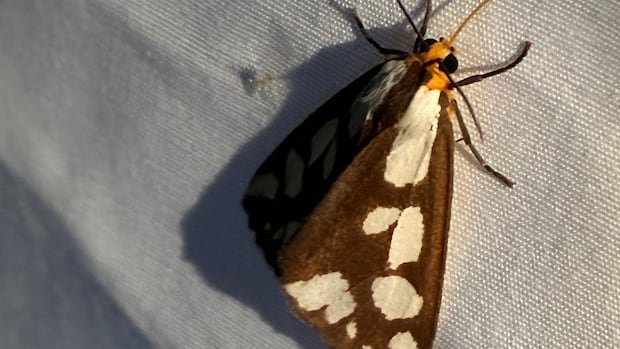
Participants are equipped with a white sheet and a black light. Thirty minutes before sunset, volunteers set up the light to attract insects onto the sheet. After an hour, participants capture images of the moths on the sheet and upload them to iNaturalist, a global database utilized by researchers.
Heustis emphasized the value of any species information for biologists. Zoë Acreman and her grandmother joined the project, documenting over 500 moths from five or six species and collecting additional data like location, time, temperature, cloud cover, and wind speed.
John Klymko, a zoologist at the Atlantic Canada Conservation Data Centre, disclosed that New Brunswick hosts over 1,700 moth species, with many potentially yet to be discovered. However, certain larger moth species like luna, cecropia, and sphinx moths have experienced population declines. He suspects other species are also dwindling, albeit with limited data.
Factors contributing to these declines include habitat loss, herbicide usage, light pollution, and the introduction of a parasitic fly to control spongy moths in North America. Moths play crucial roles as pollinators, bird food sources, and ecosystem supporters, making the monitoring project a crucial undertaking.
Klymko described moths as indicators of ecosystem health, stating that if ecosystems cannot sustain healthy moth populations, it raises concerns. Understanding which species thrive and which struggle enables targeted conservation efforts for at-risk species.