

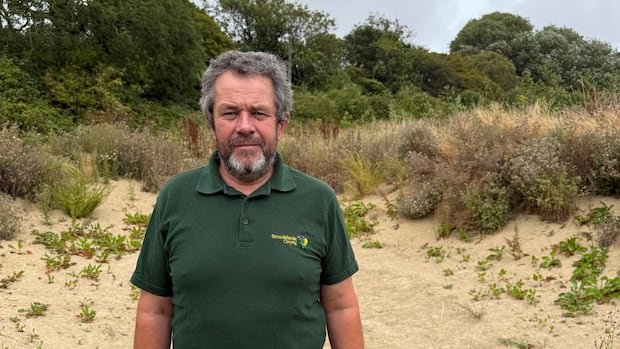

In a field on his farm in southern England, James Baird gestured towards deep cracks in the earth, expressing astonishment at the severe conditions. Baird, a nature-friendly crop farmer in West Sussex, remarked on the unprecedented summer that led to an early finish of his cereal harvest, resulting in a 25% decrease in crop yields at Stroodelande farm.
Despite England’s reputation for rain, the past five years have brought consecutive droughts, prompting Baird to acknowledge emerging patterns. This summer marked the driest period in his farming experience, transforming the typically lush English countryside into parched landscapes due to prolonged heat waves and scarce rainfall.
Official reports indicate that half of England and all of Wales are now in a state of drought following an exceptionally severe dry spell. July saw a mere seven percent of England’s average monthly rainfall, with southern regions receiving a mere one percent, totaling just 0.7 millimetres.
The ongoing drought not only challenges traditional English farming practices but also raises concerns about the nation’s long-term water security. Predictions suggest that by 2050, England could face a significant water supply deficit of five billion litres daily, potentially leading to food shortages, as warned by the National Farmers’ Union.
The impact of the drought extends beyond agriculture, with wildfires posing a growing threat. Eleanor Gilbert’s experience at Rookery Farm in Hampshire exemplifies this new normal, where farmers now combat fires amidst increasingly dry conditions. Firefighters across England and Wales have been responding to a record number of wildfires, attributed to the dry vegetation resulting from extreme heat.
Farmers are adapting to the changing climate by implementing new strategies like adding organic matter to retain soil moisture and shifting to more resilient crops like wheat. Furthermore, concerns over water management and infrastructure development have come to the forefront, with plans for reservoir construction and debates over water-intensive projects like data centres.
The drought’s effects extend to Britain’s inland waterways, impacting communities living on houseboats and canal-based lifestyles. Low water levels have led to closures and disruptions, underscoring the challenges posed by the contrasting wet winters and dry summers experienced in recent years.
Despite these challenges, individuals like Nici Griffin remain resilient, adapting to the changing conditions with a pragmatic outlook. As the impacts of the drought continue to unfold, communities and industries across England navigate the complexities of a shifting climate landscape.