

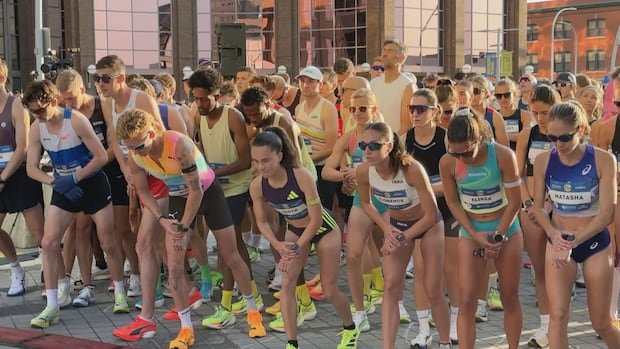

Two days post the completion of the Edmonton Marathon, the race director is issuing an apology following the discovery of an error in accounting for detours, resulting in race courses being longer than intended. The acknowledgment validates suspicions raised by several runners.
In a statement released on Tuesday, Edmonton Marathon race director Tom Keogh disclosed that the half-marathon and marathon courses were measured to be 674.7 meters longer than initially believed. Keogh expressed regret for the miscalculation related to detour adjustments and clarified that the previous statement expressing confidence in the course certification process was based on the information available at that time.
The additional distance attributed to the Wellington Bridge detour was not fully offset by adjustments made to the course’s west end turnaround point, leading to the discrepancy. Keogh took full responsibility for the error and emphasized the Marathon’s commitment to rectifying the situation.
Before the statement was issued, both elite and amateur runners had raised concerns about the race distances, with some participants stating they ran longer than the official course length. Keogh had previously maintained that the courses were accurately measured and verified on race day.
Despite the error, the Edmonton Marathon aims to collaborate with Athletics Canada and other stakeholders to address the implications for this year’s results, particularly for runners aiming to qualify for prestigious events like the Boston Marathon. The race served as a qualifier for various major running events.
One such participant, Calgary runner Mitch Walz, who had been training for a year to achieve a Boston Marathon qualifying time, expressed disappointment after realizing his chip time did not meet his target due to the extended course. Walz described the post-race period as emotionally challenging but acknowledged his effort and hoped for a chance to compete in Boston.
Keogh assured participants that steps would be taken to prevent similar errors in the future by reviewing certification processes with partners. Despite the setback, the Marathon director remained committed to ensuring a fair and accurate race experience for all participants.