

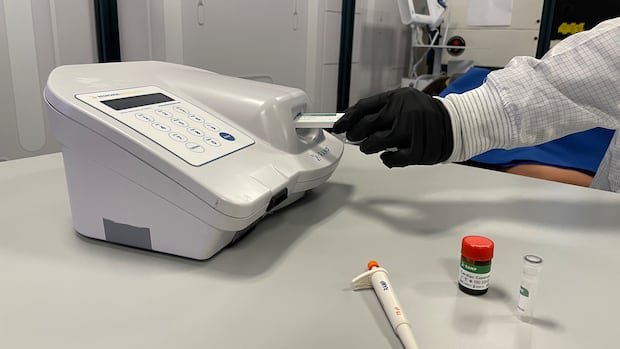

Canadian Space Agency astronaut Joshua Kutyrk is set to launch from Cape Canaveral, Florida on October 1, carrying cutting-edge Canadian technology. The challenges of living and working in space, where the human body is not suited for low gravity, can lead to various health issues, including the risk of dangerous blood clots. To address this concern, NASA has partnered with Vancouver-based Response Biomedical to utilize their technology on the International Space Station.
The technology in question, known as Acute Care Testing in Space (ACTIS), is a device derived from Response Biomedical’s existing RAMP technology. ACTIS is capable of detecting the D-dimer protein fragment in blood, a key indicator of blood clots, as well as testing for heart attacks, COVID-19, RSV, and more. This rapid blood test provides critical information within minutes, making it a valuable tool for astronauts and flight surgeons.
The efficiency and portability of this technology are not only beneficial for space missions but also have practical applications on Earth, particularly in remote communities where quick and accurate testing is essential. Response Biomedical’s CEO, Taso Tsonis, emphasized the importance of advancing testing capabilities for faster results, reducing unnecessary treatments, and improving patient care.
The potential success of ACTIS on the ISS could pave the way for its use in future space exploration missions to destinations like the moon or Mars. This achievement highlights Canada’s expertise in health and life sciences research, showcasing the country’s innovative contributions to space exploration. Both NASA and Response Biomedical view the inclusion of ACTIS on the ISS as a significant milestone, demonstrating the adaptability and value of Canadian technology in advancing scientific endeavors beyond our planet.