

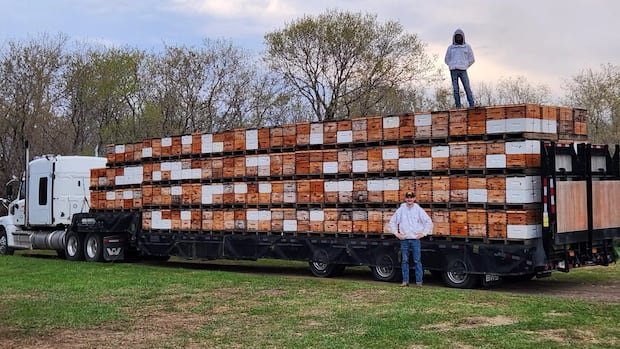

Osee Podolsky, the general manager of Podolski Honey Farms in Ethelbert, Manitoba, expressed concerns about the impact of recent U.S. tariffs on their honey exports to the United States. The family-owned farm, established by Podolsky’s grandfather over 70 years ago, faces potential bankruptcy due to the 50% tariffs imposed on $28 billion worth of Canadian goods, including natural honey.
Podolsky highlighted that approximately 90% of the honey produced by the company is typically sold to U.S. customers, making it financially unsustainable to continue shipping to their usual clientele. With the tariffs in place, the farm is at risk of going out of business, prompting Podolsky to explore alternative market opportunities within Canada, although he acknowledged the challenges posed by increased competition among local beekeepers.
The implementation of the new tariffs by the U.S. came after failed trade negotiations between Canadian and American officials. Prime Minister Mark Carney disclosed that the negotiations had been progressing towards a mutually beneficial agreement until the U.S. introduced new terms that Canada deemed economically unfair and detrimental to its interests. The U.S. negotiators raised concerns over Canada’s French language protections and attempted to impose restrictions on Canada’s trade autonomy, leading to the breakdown of talks.
In response to the unfavorable trade terms proposed by the U.S., Carney emphasized Canada’s decision to walk away from the deal to safeguard its sovereignty and key industries. He announced plans for retaliatory tariffs to counter the U.S. measures, set to be enacted post-Labour Day. The impending tariffs are expected to impact various Canadian businesses, like Podolski Honey Farms, which are now facing uncertainty and financial challenges.
Loren Remillard, the president and CEO of the Winnipeg Chamber of Commerce, expressed disappointment over the tariffs’ impact on local businesses and endorsed Canada’s stance in prioritizing the country’s interests during trade negotiations. Despite the potential economic repercussions, Remillard emphasized the importance of standing firm and seeking a fair trade deal that benefits Canada.
Meanwhile, Selkirk Mayor Larry Johannson voiced concerns over the tariffs affecting the steel industry, a significant employer in the city. He called for increased trade opportunities within Canada and with other international markets to mitigate the impact of the U.S. tariffs on local businesses.
Podolsky underscored the mutual benefits of Canada-U.S. trade for beekeepers on both sides of the border, advocating for the removal of tariffs to sustain the industry’s growth. He expressed hope for a prompt resolution to the trade dispute, emphasizing the importance of reaching a mutually beneficial agreement to support businesses like Podolski Honey Farms.