

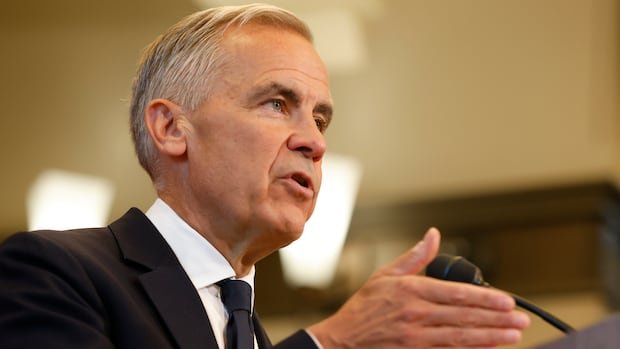

Prime Minister Mark Carney revealed that the breakdown of negotiations with the Trump administration was due to unreasonable demands that would harm key Canadian industries such as auto, steel, and aluminum. Despite progress made earlier, the momentum shifted, leading to an impasse as the U.S. requested terms unacceptable to Canada. U.S. Vice-President JD Vance countered, accusing Canada of presenting last-minute demands and exploiting the situation.
While specific details were not disclosed publicly, Ontario Premier Doug Ford labeled the proposed deal as unfavorable and commended Carney for rejecting it. Flavio Volpe, a member of Canada’s advisory committee, explained that discrepancies arose when translating the agreed spirit of the deal into written terms.
The negotiations hit a roadblock when American negotiators altered terms shortly before the deadline, excluding medium and heavy-duty trucks from tariff relief. This exclusion, affecting lucrative pickup truck production in Ontario, was a major concern for Canada. Additionally, the U.S. attempted to constrain Canada’s trade autonomy and impose sectoral tariffs on steel and aluminum, posing further challenges to the deal.
The final offer failed to address significant issues, including insufficient relief on steel, aluminum, and derivative tariffs. Despite concessions Canada was willing to make, such as dropping retaliatory tariffs and adjusting dairy import licenses, the terms did not align with Canada’s interests. The U.S. also opposed Canadian requirements for bilingual product labeling, causing further discord in the negotiations.
Carney’s decision to walk away from the deal was supported by the majority of Canadians and key figures who viewed it as necessary to protect the country’s interests. As discussions remain at a standstill, Canada awaits a viable offer from the U.S. that addresses crucial economic sectors like steel, aluminum, autos, and forest products.