

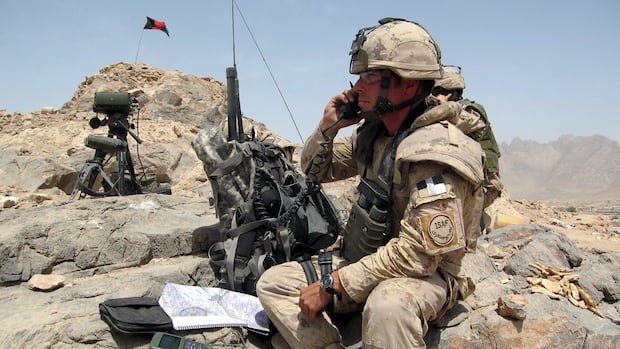

As Canadian forces advanced across the Arghandab River, former corporal Bruce Moncur was alerted to potential trouble by the unexpected sight of a green pen flare arcing through the sky. Moncur, noting that NATO typically used red flares, realized the green flare signaled the presence of Taliban forces, indicating they had walked into a trap.
Recalling the events of that fateful day 20 years ago, Moncur vividly remembers the commencement of Operation Medusa, a fierce battle fought at close quarters in the vineyards and dusty villages of Kandahar. The operation commenced with an intense artillery and air bombardment on September 2, 2006.
The following day, Moncur’s unit encountered a well-entrenched enemy, engaging them in a prolonged firefight involving machine guns, rocket-propelled grenades, and small arms. The Taliban forces displayed an unusual determination to confront the Canadian troops directly, leading to a fierce clash involving over 2,000 NATO troops, including more than 1,000 Canadians, supported by Afghan, American, British, Dutch, and Danish elements.
The primary objective of Moncur’s unit, Charles Company, 1st Battalion Royal Canadian Regiment (1RCR), was to secure a school house occupied by Taliban insurgents. The ensuing battle lasted five hours, resulting in the tragic loss of four Canadian soldiers and injuries to 16 others before the decision was made to withdraw.
Reflecting on the intensity of the combat, Moncur recounted the challenges faced, including the rescue of fallen comrades amidst the chaos of the battlefield. The unexpected resilience of the Taliban fighters, numbering around 400 against the 80 Canadian troops, underscored the gravity of the situation.
Leading up to the confrontation, insurgents had amassed in the Panjwai and Zhari districts, strategically positioning themselves with fortified defenses and defensive positions around the village of Pashmul. The Taliban’s coordinated resistance posed a significant challenge to the Canadian forces, prompting debates about external support possibly enhancing the insurgents’ capabilities.
The aftermath of the battle revealed the extent of the Taliban’s support structure in Pakistan, raising questions about external involvement in bolstering their ranks. The engagement highlighted the Taliban’s tactical sophistication, with planned ambushes, counterattacks, and disciplined retreats when faced with overwhelming firepower.
Tragedy struck again with a friendly fire incident that injured Moncur and several others, further complicating the operation. Despite the setbacks, the resilient Canadian forces, under the leadership of Brig.-Gen. David Fraser and Lt.-Col. Omer Lavoie, adjusted their tactics and ultimately achieved a decisive victory, compelling the Taliban to revert to guerrilla tactics.
The conclusion of Operation Medusa marked a turning point in the conflict, demonstrating the resolve of the Afghan people and the commitment of allied forces to stand against insurgent threats. The operation’s success not only repelled the immediate danger but also inspired a newfound determination among the local population to resist Taliban influence.