

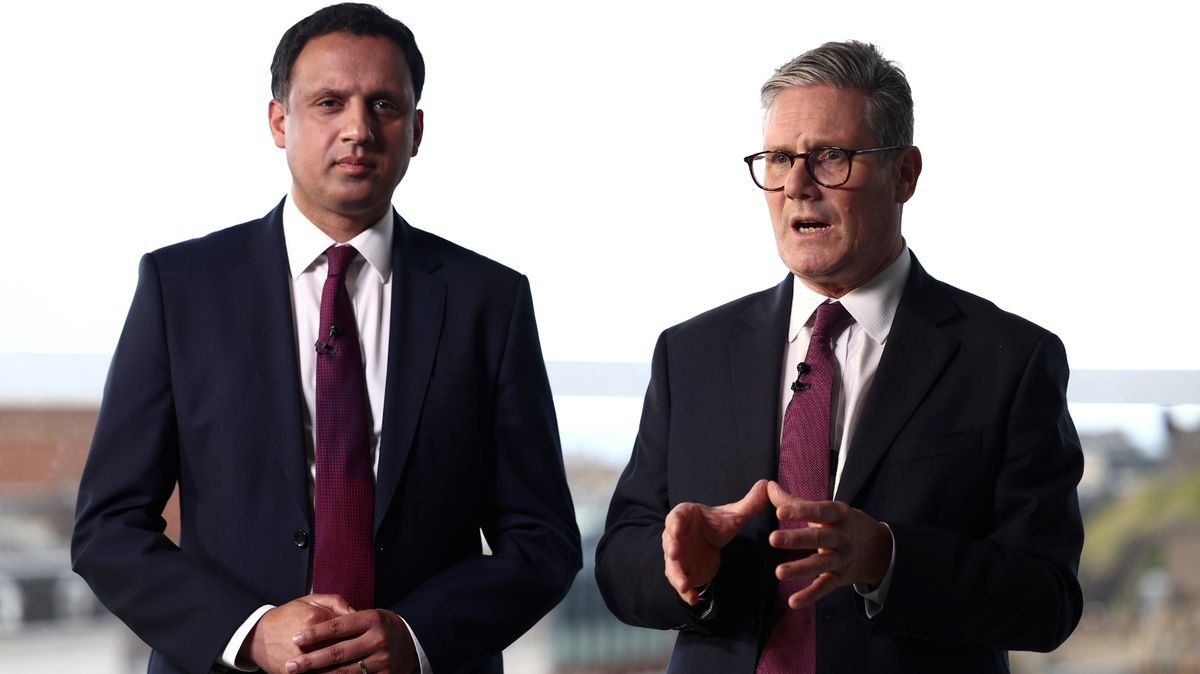

Anas Sarwar’s move to advocate for Keir Starmer’s resignation marked a significant development. Previously, calls for the Prime Minister to step down had mainly come from left-wing backbenchers who have long criticized his policies and leadership. Sarwar, a prominent and influential figure in the Labour party, became the most senior member to urge Mr. Starmer to step down.
During a hastily arranged press conference, the Scottish Labour leader delivered a scathing assessment, highlighting numerous mistakes and labeling the leadership in Downing Street as a major distraction. Sarwar expressed personal anguish in calling for his “friend” Starmer’s departure but emphasized his primary allegiance to Scotland, adding a dramatic twist to the situation.
Sarwar’s action was driven by the struggles of Scottish Labour in pre-election polls and the belief that the Prime Minister’s lack of popularity was impeding the party’s prospects. Despite this, Starmer received backing from his Cabinet, with key ministers uniting in support.
Noteworthy was the public backing from Angela Rayner and Wes Streeting, both potential successors to Starmer. However, both individuals faced their own controversies, with Rayner under investigation for tax matters and Streeting confronting questions about his association with Peter Mandelson, whose ties to Jeffrey Epstein have caused disruptions within the government.
In response, Streeting proactively disclosed his communications with Mandelson to counter allegations and criticized the government in the process, further straining relations between his camp and No10.
The Cabinet’s support alleviated the perceived threat to the Prime Minister, who also garnered backing from some backbenchers following a passionate address at a Parliamentary Labour Party meeting. Nevertheless, Sarwar’s remarks dealt a severe blow to Starmer, who recently lost key personnel and faces internal discontent over decisions such as appointing Mandelson as the US ambassador.
While some MPs express dissatisfaction, there is reluctance among certain quarters to initiate a leadership contest, fearing public backlash over frequent leadership changes within the Labour party.
Starmer has managed to buy himself additional time, yet uncertainties linger regarding his ability to weather future challenges.