

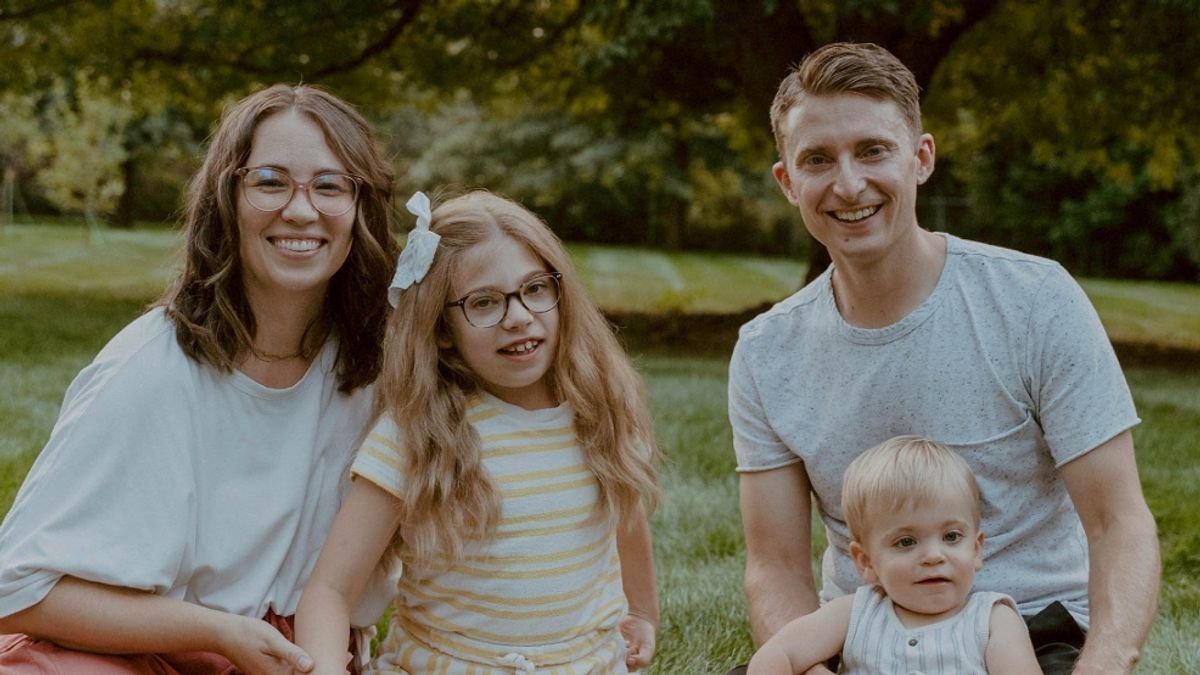

New parents, Megan and Kyle Kempf, initially had no concerns about their daughter Poppy’s health after a “normal pregnancy.” However, their world took a drastic turn when they observed a decline in Poppy’s drawing abilities.
At the age of three, subtle signs of potential health issues emerged in Poppy, prompting the worried couple to seek medical advice. Despite their efforts, it took five years to receive a diagnosis for their daughter.
They now face the heartbreaking reality that both Poppy and her younger brother Oliver have a rare, incurable disease that significantly reduces life expectancy. Despite this, the determined parents are optimistic about a new treatment pending medical approval.
Megan noticed a concerning change in Poppy’s drawing skills when she regressed from drawing detailed figures to simple circles at the age of three. Alongside this, they discovered that Poppy had sleep apnea and developed a fear of bedtime.
As Poppy entered school, her developmental delays became more evident, leading to a diagnosis of mild intellectual disability at the age of five. A move to Quincy, Illinois, brought about further concerns for the family.
After consulting a neurologist, Poppy underwent genetic testing, revealing a positive result for Sanfilippo syndrome type B, a rare genetic disorder causing progressive neurodegeneration. The condition, often referred to as ‘childhood dementia,’ presents various symptoms and significantly shortens lifespan.
Given the genetic nature of the disease, they tested their son Oliver, who also tested positive. The diagnosis, while providing a sense of closure, brought the devastating realization of limited life expectancy for their children.
Faced with the absence of a cure, the parents refused to accept the prognosis and explored alternative options. They found hope in enzyme replacement therapy, a promising treatment currently in clinical trials awaiting FDA approval.
The family, along with other Sanfilippo families, are actively fundraising and advocating for the approval of the treatment, aiming to make it accessible to affected children by 2027. Their goal is to provide a solution for children battling rare diseases like Sanfilippo syndrome type B.