

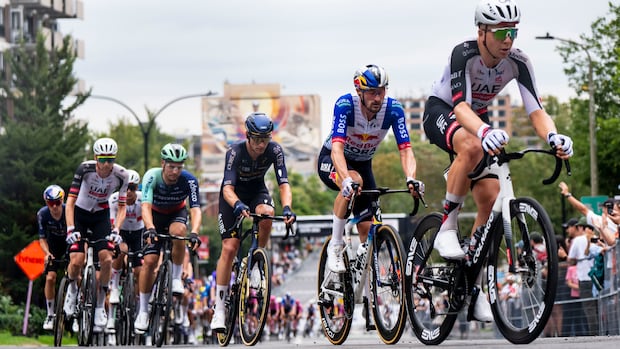

Montreal is set to become the hub for the world’s top road cyclists.
From September 20 to 27, the city’s historic cobblestone roads in the old port and the famed Mount Royal will morph into an extensive circuit spanning hundreds of kilometres, as competitors from all over the world vie for the title of road cycling world champion.
The UCI Road Cycling World Championships stand out as one of the few professional road cycling competitions, apart from the Olympic Games, where cyclists represent their nations rather than their professional teams. This year’s event will feature over 1,000 athletes from more than 75 countries. Comprehensive coverage of the championships will be provided by CBC Sports and CBC Gem.
The championships will consist of 13 events, ranging from 10 to 274 kilometres, showcasing not only the elite road cycling stars but also the emerging talents in the junior and under-23 categories.
A notable participant for Canadians is Quebec cyclist Magdeleine Vallieres Mill, who has the opportunity to make history by defending her world championship title on home soil. She claimed the prestigious rainbow jersey after winning the elite women’s road race at last year’s championships in Kigali, Rwanda.
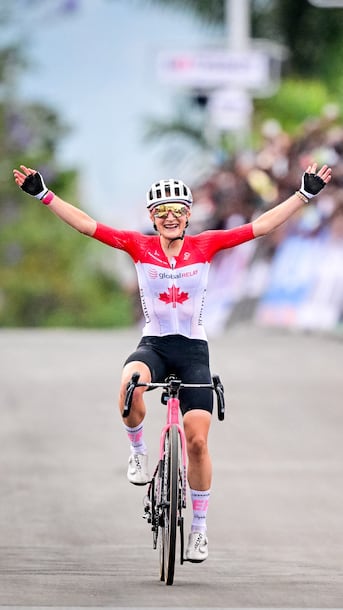
The Road Cycling World Championships returns to Montreal after 50 years. With Canadian talent young and old set to hit the road, here’s what you need to know to get you up to speed.
“It’s such an honour to race at home, I don’t get to do it a lot,” Vallieres Mill expressed. “Competing in front of Quebec, Canada, and all my family and friends will be an incredible experience.”
“I hope that young cyclists come to watch the Worlds and realize that it’s achievable. We’re representing Canada, going up against the best. I want them to see that they can also ride a bike.”
This marks the second occasion the event has taken place in Montreal, with the first being 50 years ago when cycling legend Eddy Merckx shone and helped establish the city as a cycling destination. Montreal was the first city outside Europe to host this prestigious race.
The event’s return coincides with a significant surge in cycling interest within Montreal. According to Tourism Montreal, the city anticipates attracting over half a million spectators and a global television audience of more than 200 million.
“Cycling is both a sport and a mode of transport. A large portion of the population rides bikes. Even those who haven’t competed can relate to the challenge of riding 280 kilometres,” stated Mathieu Boucher, CEO of Cycling Canada.
Thirteen events for both men and women will be conducted across three categories: individual time trials; mass-start road races; and a mixed relay team time trial.
The individual time trial for elite men and women will occur on a 40-km route along the St. Lawrence River, the Gilles Villeneuve Formula 1 Circuit, and Parc Jean-Drapeau.
The highlight events of the week will be the 274-km road races for elite cyclists, which will feature multiple circuits beginning in Brossard on Montreal’s south shore and progressing towards Mount Royal.
“Montreal is fantastic, but what makes it unique is the circuit format that allows spectators to see the riders repeatedly,” remarked veteran Canadian cyclist Mike Woods, a former stage winner in the Tour de France who is returning from retirement to compete.
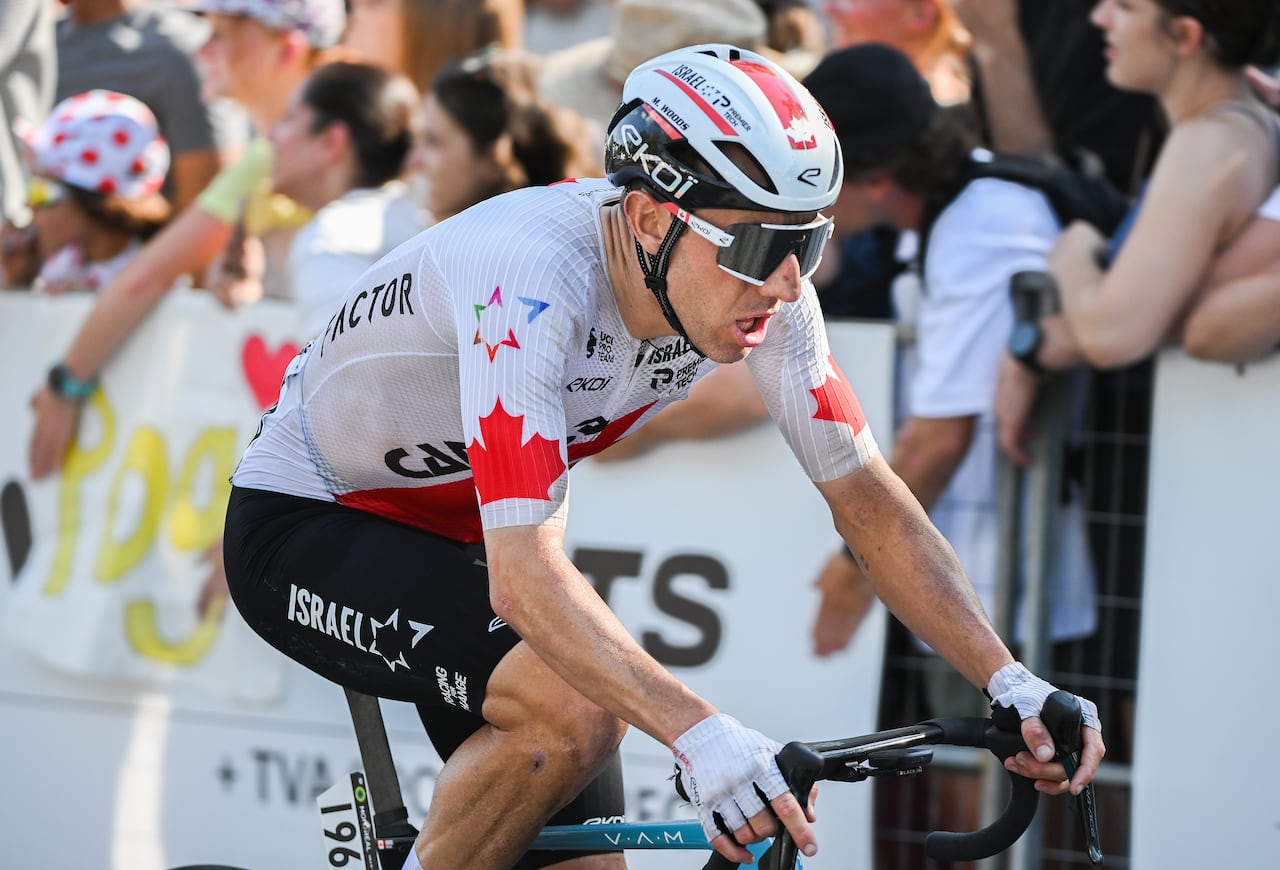
Veteran Canadian rider Michael Woods is keen to compete at a home world championship. (Graham Hughes/Canadian Press)
“Wearing the maple leaf is always a source of pride, but this will be especially meaningful,” he said. “Competing on home ground will be incredible. I find myself getting emotional just thinking about it. It will be something special.”
Cycling Canada is dispatching a talented team to represent the nation in Montreal. The elite men’s road race lineup includes Woods, Derek Gee-West, Pier-André Côté, Hugo Houle, Michael Leonard, and Nickolas Zukowsky.
On the women’s side, alongside Vallieres Mill, Canada will also field Alison Jackson, Maggie Coles-Lyster, Nadia Gontova, Olivia Baril, Sarah Van Dam, and Adèle Normand. Cole-Lyster, the reigning Canadian road cycling champion, recently achieved a bronze medal for Canada in track cycling at the Commonwealth Games.
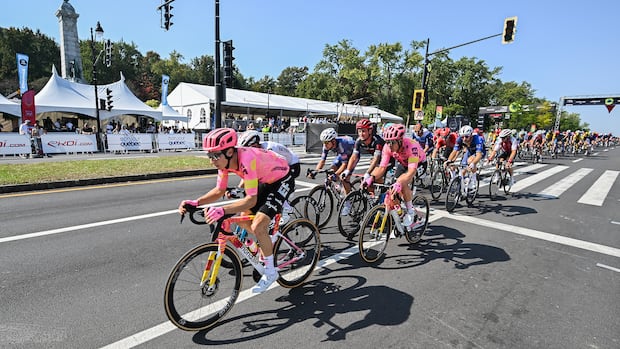
The UCI Road World Championships run from Sept. 20 to 27 and will span 36 kilometres of road network, with the most significant impact being Parc Avenue, between des Pins and Mont-Royal avenues. That stretch will be closed for a month, starting Sept. 4.
A significant aspect of preparing for the cycling world’s arrival in Montreal has involved enhancing the city’s infrastructure. This includes resurfacing 36 kms of roads, upgrading 13 kms of cycling paths linking the suburbs to the city center, and establishing new permanent bike lanes along the St. Lawrence River.
“Canadians have a passion for riding bikes, whether they aspire to compete in the Tour de France or not,” remarked Adam van Koeverden, Canada’s Secretary of State for Sport. “Cycling serves as a natural means for commuting to work or school and for recreational activities on weekends. Promoting a healthy and active lifestyle is vital for Canadians.”
Van Koeverden noted that the federal government has allocated more than $13 million to facilitate the world championships, complemented by substantial contributions from Quebec and Montreal.
“We aim to create more exceptional opportunities on home soil. This benefits our economy, enhances our global standing, and improves the sports infrastructure that local communities utilize throughout the year,” van Koeverden concluded.