


Hating a movie can be just as engaging and possibly more enjoyable than loving it. A film that is notably foolish, poorly conceived, or morally wrong can offer as much material for contemplation and conversation as one that is truly moving. In both scenarios, there is at least something to engage with.
It is disappointing to come across a film like “The Social Reckoning.” This sequel, written and directed by Aaron Sorkin, follows the remarkable 2010 Facebook origin tale “The Social Network,” also scripted by Sorkin and helmed by David Fincher. “The Social Reckoning” falls into the category of deplorable anti-art creations, being so vacuous and unoriginal that it fails to provoke genuine hatred, despite positioning itself as perpetually relevant.
The movie, revolving around the issues of social media and corporate-controlled conformity, could ironically exemplify the problem it aims to critique: the abundance of subpar and uninteresting “content” inundating our social feeds and personalized recommendation pages. However, this mishandling of promising source material is attributed to a cast and crew comprising some of the industry’s most intriguing talents.
“The Social Reckoning” delves into Facebook’s era of exponential expansion and promises to dismantle one of the three tech titans of doom. The other two figures are portrayed in Alex Gibney’s documentary “Musk,” set for release on Oct. 16 in Canada, and Luca Guadagnino’s Sam Altman/OpenAI critique “Artificial,” which premiered to acclaim at the New York Film Festival.
The narrative unfolds with Wall Street Journal reporter Jeff Horwitz, played by Jeremy Allen White, and Facebook product manager Frances Haugen, portrayed by Mikey Madison, uncovering a clandestine malpractice known as MSI (Meaningful Social Interactions). This insidious operation has destabilized governments, corrupted minds, and distorted the very essence of truth.
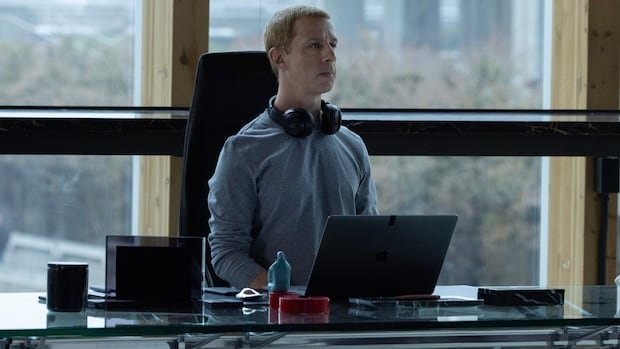
Meanwhile, Jeremy Strong, known for his role in “Succession,” embodies the declining Mark Zuckerberg, facing scrutiny for his company’s contribution to the erosion of democratic values and youth mental well-being worldwide. Despite Strong’s portrayal, the character lacks depth compared to previous interpretations, leaving him overshadowed by the film’s broader narrative.
The depiction of Zuckerberg in “The Social Reckoning” feels more like a superficial narrative device rather than a pivotal character. This rendition fails to explore Zuckerberg’s motivations effectively, reducing him to a peripheral figure lingering in the background, devoid of substantial influence on the unfolding events.
The film’s shortcomings can be traced back to Aaron Sorkin, known for his distinctive writing style and penchant for stylized dialogues. Even for fans of Sorkin’s signature storytelling approach, “The Social Reckoning” falls short of expectations, delivering a lackluster narrative that superficially addresses pressing societal issues without delving into them meaningfully.
Overall, “The Social Reckoning” presents a contrived and sentimental narrative that fails to engage with its topical themes effectively. The film meanders through familiar journalism tropes, culminating in a clichéd and unsatisfying conclusion that underwhelms rather than resonates with the audience. Despite its potential, the movie’s lack of risk-taking and narrative ambition ultimately diminish its impact and leave audiences wanting more.