

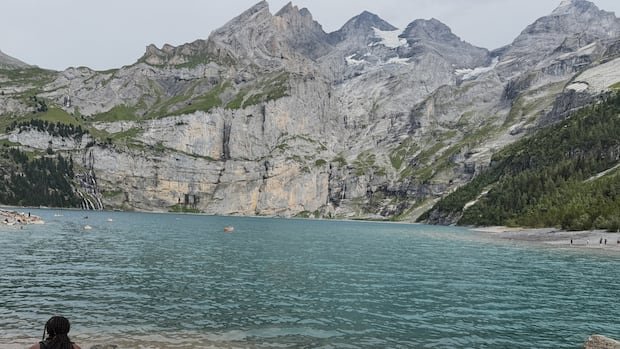

Glaciers in Switzerland, known for having the most glaciers in the Alps, have experienced a 5.5% decrease in ice volume this year, marking the second-largest drop on record. This decline is attributed to heat waves and low snowfall during the winter, according to experts. The GLAMOS Swiss glacier monitoring service and Swiss Academy of Sciences expressed concerns, stating that under current conditions, Alpine glaciers have a slim chance of long-term survival.
The situation has deteriorated in recent years, with a nearly 20% reduction in ice volume in Switzerland over the past five years alone. This trend underscores the ongoing impact of global warming on Europe, which is recognized as the fastest-warming continent worldwide.
Matthias Huss, leading GLAMOS, emphasized the critical role of winter snowfall in glacier preservation. Snow acts as a protective layer, preventing ice from melting, while also contributing to the formation of new ice. The absence of adequate snow cover exacerbates the vulnerability of glaciers to melting.
The effects of climate change are not limited to the Alps, as evidenced by the destabilization of a Himalayan slope in August, triggering devastating floods in Nepal. Satellite observations have revealed significant glacier shrinkage in regions like Greenland and Antarctica over the past few decades.
In Switzerland, while the absolute volume loss this year is lower than that in 2003, the percentage decline is more significant due to the substantial decrease in total ice volume over the years. The loss is equivalent to four times the annual water consumption of the country, highlighting the magnitude of the situation.
The accelerated melting has far-reaching consequences, as Switzerland serves as a vital water source for Europe, feeding major rivers such as the Danube, Po, Rhine, and Rhone. The excessive melting this year led to a noticeable decrease in glacier thickness and length, particularly affecting glaciers like Allalin, Clarident, Rhone, and the largest in the Alps, Aletsch.
Experts emphasize the urgent need to reduce CO2 emissions to stabilize the climate and mitigate further glacier loss. While saving the Swiss Alps glaciers may be challenging at this point, efforts to preserve polar ice sheets can still make a significant difference in limiting sea-level rise and protecting coastal communities from the imminent threat.