

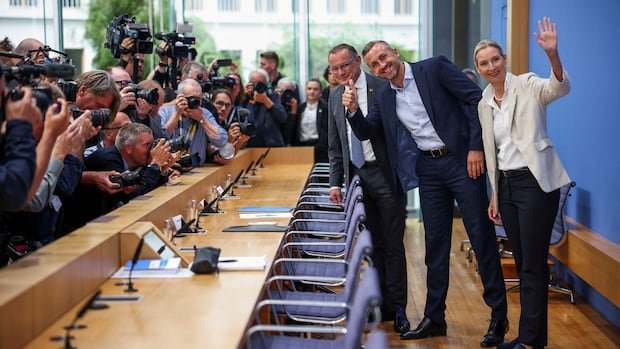

Voters in Saxony-Anhalt, a state in eastern Germany, have decisively elected the far-right Alternative for Germany (AfD) to govern, marking a significant victory for the once marginal populist party. Local intelligence agencies in several states, including Saxony-Anhalt, have labeled the AfD as right-wing extremist, with members facing criticism for using Nazi slogans.
This election outcome on Sunday has been interpreted by some experts as a reflection of a deep crisis within Germany’s established political landscape. It also sends a signal to right-wing populist movements globally, suggesting a shift in political dynamics in their favor as various regional and federal elections loom within the European Union.
Alice Weidel, the federal co-leader of the AfD, expressed her excitement and pride following the election results in Saxony-Anhalt, emphasizing the party’s responsibility not only within the state but across Germany.
The AfD’s agenda in Saxony-Anhalt includes pledges to enhance ties with Russia, prohibit Pride flags in schools, and establish segregated classrooms for refugee children. The party advocates for “remigration,” a term commonly used in far-right circles to denote mass deportations of individuals with a migration background.
Notably, AfD members in Saxony-Anhalt have lauded U.S. President Donald Trump as a source of inspiration, even adopting the slogan “Make Saxony-Anhalt Great Again” during their campaign. Both Trump and tech entrepreneur Elon Musk have reacted to the election results, with Musk congratulating the AfD candidate and Trump posting about the outcome on his social media platform.
As the AfD prepares to potentially assume power in Saxony-Anhalt, concerns have been raised about its stance on Russia, with the party advocating for a shift in Germany’s relations with the country. The AfD’s rise in the region reflects broader dissatisfaction with traditional political parties and a desire for change among voters, particularly in rural areas.
The AfD’s success in Saxony-Anhalt poses challenges for mainstream parties like the Christian Democratic Union (CDU), which suffered significant losses in the election. The CDU’s leader, Chancellor Friedrich Merz, faces declining popularity, prompting speculation about the party’s future electoral prospects.
The AfD’s victory has also raised questions about the ability of mainstream parties to form coalitions that exclude the AfD from power. With the AfD’s growing support nationally and its positioning in opinion polls, the party’s influence on German politics is likely to continue to be a significant factor in the country’s political landscape.