

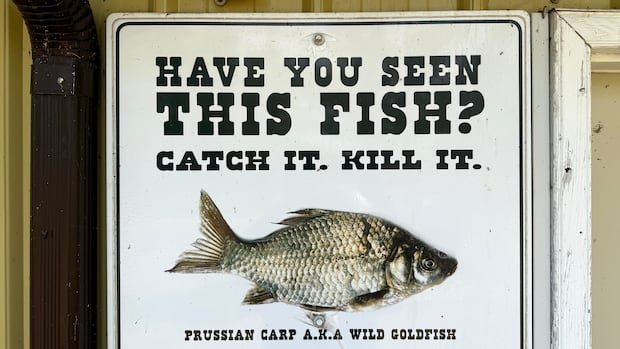

A team of researchers is conducting a study on invasive Prussian carp at Blood Indian Creek Reservoir in eastern Alberta. The researchers use traps baited with corn and cat food to catch the silvery fish, which are then euthanized with a quick knife strike to the brain stem for analysis.
Allison Campbell, leading the research team with three summer students from Medicine Hat College, emphasizes the need for targeted removal methods to manage the invasive carp population effectively. The team is experimenting with a new net system to capture and remove the carp while also identifying potential fishing spots for the species within the reservoir.
The once-popular trout fishery at Blood Indian Creek Reservoir has been significantly impacted by the presence of Prussian carp, which began to proliferate in 2012. John Armstrong, a former park supervisor in the area, recalls the thriving environment before the carp invasion and stresses the importance of managing the invasive species for ecosystem balance.
Prussian carp, known for their rapid reproduction and bottom-feeding behavior, pose a threat to native fish populations by disrupting food sources and habitat. At Blood Indian Park, efforts to remove carp have been ongoing, with provincial teams removing a substantial number of carp in recent years while still stocking trout and walleye.
The spread of carp throughout central and southern Alberta’s river systems has raised concerns about the ecological impact. The Alberta government is actively involved in campaigns to prevent the introduction of invasive species like zebra mussels into local waters to safeguard the environment.
Efforts to contain invasive carp extend beyond Blood Indian Creek Reservoir, with ongoing research on active management strategies rather than eradication methods. The research team is exploring innovative net systems and fishing techniques to control the carp population effectively while minimizing the impact on native fish species. These efforts are part of a broader initiative to address invasive species threats in Alberta’s waterways.