

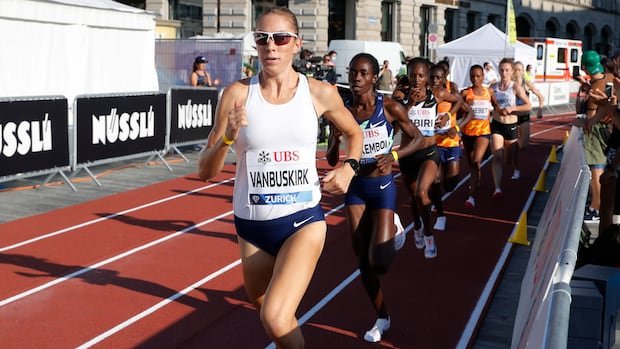

When Kate Van Buskirk competed in the women’s 5,000 meters at the Tokyo 2021 Olympics, she achieved her second fastest time despite the scorching 41°C weather. Following the race, she collapsed on the track, reflecting on the moment as one of the most intrusive instances she was photographed, with images circulating online from various angles.
A study by The Representation Project during the Tokyo 2021 Olympics revealed that female athletes were sexualized nearly ten times more than their male counterparts, despite broadcasters emphasizing “sport appeal, not sex appeal” to camera operators. Van Buskirk, now retired and working as a track and field analyst, emphasized the importance of focusing on performance rather than appearance in sports coverage.
The issue of women’s sports coverage extends to uniform choices, with debates arising over the design and fit of outfits like Nike’s controversial high-cut bodysuit for Team USA ahead of Paris 2024. Van Buskirk, referring to her track attire as her “equipment,” opts for minimal fabric to balance comfort, dignity, and professionalism as an athlete.
In response to concerns about intrusive camera angles and sexualized imagery in women’s athletics, the European Broadcasting Union and European Athletics introduced new guidelines in July 2026 to address problematic broadcasting practices that add no narrative value. The move aims to combat the dissemination of sexualized content and online abuse targeting athletes.
Van Buskirk and other athletes have faced challenges with inappropriate camera placements and sexualized replays, urging for more conscious editorial decisions to respect athletes’ privacy and dignity. While progress has been made in establishing guidelines for respectful coverage, experts argue for stricter policies to ensure accountability and uphold the integrity of sports broadcasting.
As the World Athletics Ultimate Championship approaches in Budapest, heightened attention on athletics underscores the importance of setting clear broadcasting standards to prevent objectification and promote athletic excellence over entertainment. Van Buskirk emphasizes the distinction between informing and entertaining, stressing the need to prioritize education and storytelling over objectification in sports media.