

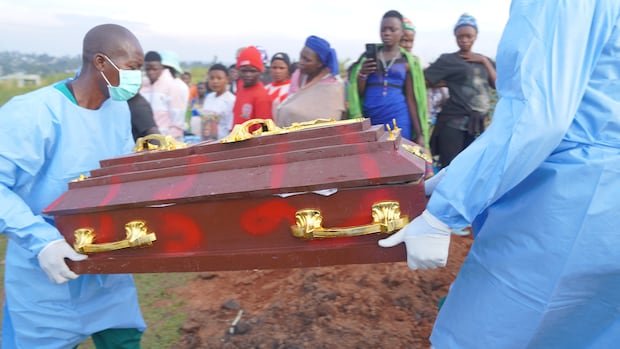

Health authorities combating the Ebola crisis in eastern Democratic Republic of Congo are utilizing de-identified mobile phone data to track population migrations and pinpoint potential areas of Ebola transmission, as reported by the World Health Organization (WHO) and collaborating researchers. This innovative strategy, a first in Ebola response efforts, is being employed amid challenges in containing what the WHO has labeled as the most rapidly escalating Ebola outbreak on record. To date, the outbreak has spanned six provinces, infecting over 6,250 individuals and claiming the lives of 3,039 since its declaration on May 15, according to the most recent government figures.
This 17th Ebola outbreak in Congo, caused by the Bundibugyo strain of the virus, lacks approved vaccines or treatments. With the virus spreading, health officials are strategizing to predict potential outbreak areas and allocate limited surveillance and response resources effectively.
Olivier Le Polain, the head of epidemiology and analytics for response at the WHO Health Emergencies Programme, emphasized the significance of population movements in outbreak dynamics, especially in the current epidemic. Traditional risk assessments typically focus on outbreak hotspots and assume gradual spread to neighboring regions. By analyzing mobility data, responders can identify risks in areas that may be physically distant but closely linked through travel patterns.
The analysis, conducted by the Swedish non-profit Flowminder, utilizes anonymized records from mobile phone connections to track individual movements within the country. Flowminder, which receives this data free of charge from Vodacom, Congo’s primary operator, ensures the privacy of individual subscribers by only using aggregated and de-identified information.
By examining travel patterns in areas where the outbreak originated, such as Bunia, Mongbwalu, and Rwampara, researchers have identified significant flows of travelers to nearby regions in Ituri and North Kivu provinces. The expansion of the analysis to other affected regions, including Kisangani, a crucial transportation hub, has allowed for proactive measures to contain potential outbreaks.
Recent studies have underscored the connections between Kisangani and other regions, highlighting potential transmission risks to populous areas like Kinshasa. The WHO has cautioned about the possibility of the outbreak extending to Kinshasa and neighboring countries, with modeling exercises projecting a substantial likelihood of cases emerging in Kinshasa by the end of September.
While the current analysis provides valuable insights, it has limitations due to its reliance on data from a single telecom operator, Vodacom, offering a partial view of movements across borders. Efforts are underway to collaborate with other operators to enhance coverage and access more comprehensive data for improved outbreak response and containment strategies.