

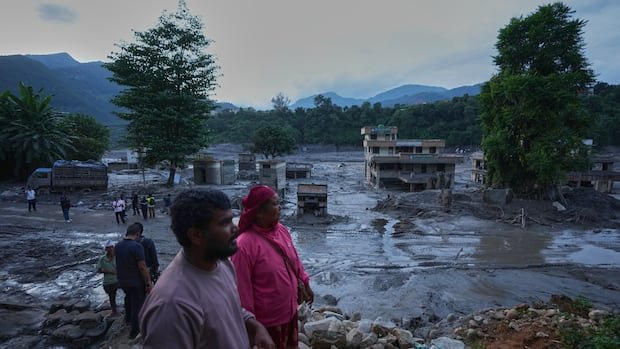

Geoscientist Jakob Steiner describes the recent event in Nepal’s Himalayas as resembling a scenario where a huge chunk, 1,300 meters wide, was surgically removed from a glacier and dropped off a cliff, causing a significant impact. The resulting blast of ice, rocks, and sediment fell 1.2 kilometers from a height of 5,000 meters, temporarily blocking the river below and forming a lake.
After the lake filled with water released from the glacier, the dam broke, triggering a violent torrent that devastated villages downstream on both sides of the border. The aftermath led to the formation of additional threatening lakes that could potentially exacerbate the already dire situation. The death toll in Nepal has risen to at least 579 people, with 1,400 individuals, including 32 Canadians, still missing.
Local indigenous communities had previously warned about the mountain, Langtang Lirung, being volatile, and this tragic event validates their concerns. While some climate scientists are hesitant to directly attribute this collapse solely to human-caused climate change, experts studying glacier hydrology and the impacts of global warming on the cryosphere have long warned about such catastrophic events, especially in the Himalayas.
John Pomeroy, the director of the University of Saskatchewan’s Centre for Hydrology, emphasizes that such devastating incidents are becoming more frequent due to the destructive effects of climate change on natural ecosystems. The rapid changes are challenging for human adaptation, and urgent action is needed to address the underlying issues.
Climate scientist Manjueet Dhakal highlights the intricate nature of the Himalayas and how global warming has significantly impacted the region. The warming climate has altered precipitation patterns, accelerated glacier retreat, and increased the frequency of natural disasters like avalanches and flash floods. The loss of glacier coverage and thawing permafrost further signify the destabilization of these high-altitude environments.
The recurring threat of glacial lake outburst floods (GLOFs) poses a significant risk to vulnerable communities living near glaciated regions. These events, triggered by various factors like intense rainfall, avalanches, or natural dam breaches, have become more prevalent due to global warming-induced changes in glacier dynamics.
Research indicates that millions of people living near glacier-prone areas are at risk of GLOFs, particularly in the Himalayas, Andes, and Alps. The vulnerability of mountain communities underscores the urgent need for proactive measures to mitigate risks and enhance disaster preparedness.
The recent disaster in Nepal serves as a stark reminder of the urgent need for coordinated global action to address climate change. Geoscientist Jakob Steiner emphasizes the importance of early warning systems and international cooperation to prevent such tragedies in the future. Efforts to reduce greenhouse gas emissions and limit further global warming are crucial to safeguarding vulnerable communities and ecosystems from future climate-related disasters.