

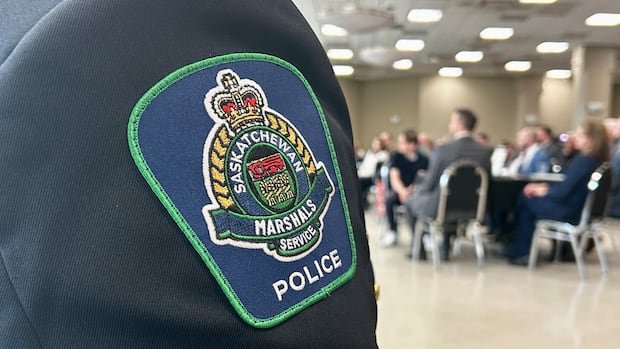

The Saskatchewan Marshals Service is currently in the initial phases of establishing its own tactical unit, equipped with sniper rifles, night vision goggles, and long-range acoustic devices (LRAD). Chief Marshal Robert Cameron mentioned that this unit, known as a serious response unit (SRU), has always been part of the strategy for Saskatchewan’s newest police service. The primary focus of the SRU is to support the Marshal Service’s core mission, which involves pursuing individuals wanted on warrants, prolific offenders, and individuals engaged in high-impact and high-risk criminal activities.
Since its launch in May 2025, the marshals have been tasked with assisting other law enforcement agencies in combating rural crime, gang activities, and drug-related offenses. They are also responsible for apprehending high-risk offenders with outstanding warrants. Building a tactical unit from scratch offers a unique opportunity for the marshals, according to Cameron.
Criminologist Amin Asfari, who holds the Law Foundation of Saskatchewan Chair in Police Studies at the University of Regina, suggests that the necessity of the tactical unit should be publicly justified by the organization. Asfari points out that the SRU’s functions may overlap with those already provided by the Regina Police Service, Saskatoon Police Service, Prince Albert Police Service, and Saskatchewan RCMP, each of which has its own tactical units. He questions the need for a separate unit and suggests potential collaboration with existing agencies.
Concerns have been raised about the inclusion of long-range acoustic devices (LRAD) in the planned SRU equipment. LRADs are capable of transmitting high-decibel sound waves, which can serve various purposes, including crowd dispersion. However, Asfari highlights potential risks associated with their use, such as unintended harm to individuals not targeted. The cost and necessity of such equipment have been questioned by Asfari.
Cameron defended the use of LRADs, stating their common use across different police services in Canada for message transmission. While Saskatoon police confirmed their possession of an LRAD, Regina police did not have one, and the RCMP did not provide a response on the matter. Asfari emphasizes the importance of transparency regarding the intended use of LRADs by the marshals.
The Saskatchewan NDP has criticized the marshals service for its decision to establish a tactical unit, raising concerns about the cost of equipment and its alignment with the service’s mandate. Opposition member Hugh Gordon highlighted the significant financial investment and specialized training required for the specialized equipment. The NDP has been critical of the marshals service since its inception, accusing it of recruiting officers from other police agencies instead of training its own members.
The marshals service aims to have 70 employees and is still in the early stages of the SRU’s development, with the tender for the unit’s equipment recently closed. Cameron emphasized that there is a substantial amount of time before the SRU becomes operational.