

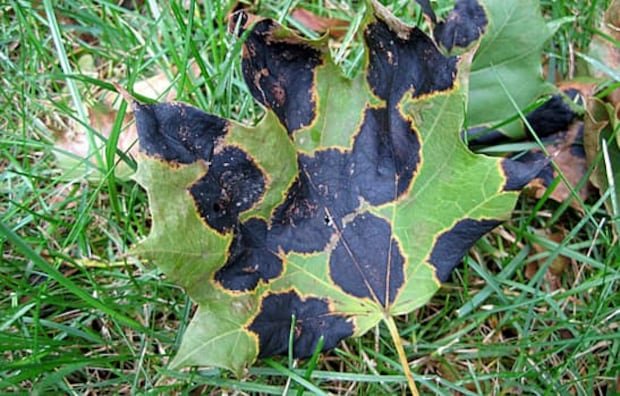

P.E.I.’s recent cold and wet spring weather has led to the emergence of tar spots on some trees, causing concern among Islanders. Kurt Laird, a certified arborist at Laird Tree Care, has observed an increasing number of reports about trees shedding leaves prematurely, giving the appearance of autumn in backyards.
The tar spot fungus primarily affects Norway maple trees, classified as an invasive species in the region. This fungal infection manifests as black spots that obstruct the tree’s water supply, leading to leaf loss. Laird explained that rain aids in spreading the spores, which penetrate the soft new tissue of leaves, eventually causing damage over time.
According to provincial authorities, tar spots are a common fungal disease seen predominantly on Norway maples, commonly planted in municipal areas across Prince Edward Island. The statement reassured that the disease does not pose a safety risk, and treatment is typically unnecessary.
The damp springs experienced in P.E.I. in recent years have set the stage for the early appearance of tar spots. Laird forewarned about the current year’s severity two months ago, with many residents only now noticing the impact.
Addressing treatment challenges, Laird highlighted the complexities of using leaf sprays or fungicides, which struggle to adhere during moist conditions. While fungicide spraying may offer some relief, the restrictions on pesticide use make it challenging to find effective products. Maintaining tree health and disposing of fallen leaves properly are recommended practices to mitigate the spread of the tar spot fungus.