

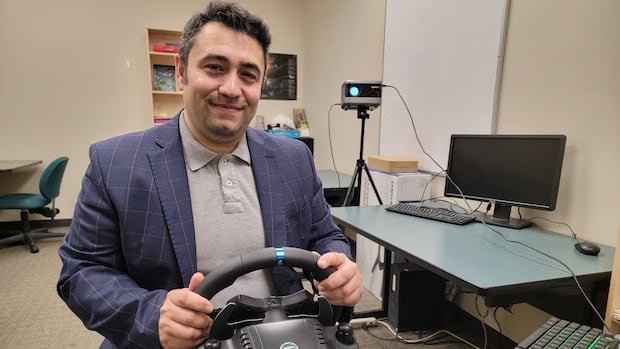

A researcher from the University of Northern British Columbia is exploring driving habits to potentially enhance wildfire evacuation procedures in the future. Alireza Noory, a UNBC Ph.D. candidate, has devised a driving simulator with the goal of assisting emergency planners in northern regions to gain insights into driver reactions during wildfire evacuations.
The simulator will involve participants navigating Highway 97 north of Prince George under normal conditions and then in a simulated wildfire evacuation scenario. Various factors such as reaction time, speed, acceleration, braking, and lane positioning will be assessed in both scenarios. Noory stated that utilizing behavior data from local drivers can lead to more accurate evacuation predictions and aid local agencies in devising safer and more efficient evacuation strategies.
The gathered data will be utilized to fine-tune a computerized traffic model of Prince George, potentially enabling city officials to anticipate traffic movements during evacuations. This calibrated model can help in analyzing evacuation travel times, congestion, road closures, and alternative traffic management tactics proactively.
Noory mentioned that the study will reveal how drivers adjust their behavior when faced with reduced visibility, urgency, emergency messages, and wildfire-related risks. He noted an interesting observation that some drivers intentionally reduce their speeds during such situations.
In addition to road evacuations, the provincial evacuation process for Indigenous and local governments highlights the significance of planning for transportation infrastructure capacity, potential congestion points, and alternative transport modes like air, rail, and marine options. Communities are advised to consider factors such as exit route limitations, vulnerable areas, fuel availability, and coordination with relevant authorities in evacuations.
Mayor Surinderpal Rathor of Williams Lake emphasized the importance of communities having diverse tools for handling emergencies. Reflecting on a past chaotic community-wide evacuation in 2017, Rathor stressed the need for adequate preparedness to alleviate fear and uncertainty among evacuees.
He also pointed out the influx of newcomers to the community and highlighted the potential benefits of the study in assisting them in understanding evacuation procedures. Rathor emphasized the heightened stress levels and challenges faced by individuals during wildfire evacuations due to increased traffic volume and lack of familiarity with such scenarios.
Researchers are seeking adult drivers of varying ages and experience levels to participate in the project, aiming to enhance wildfire evacuation planning based on real-world driving behaviors.