

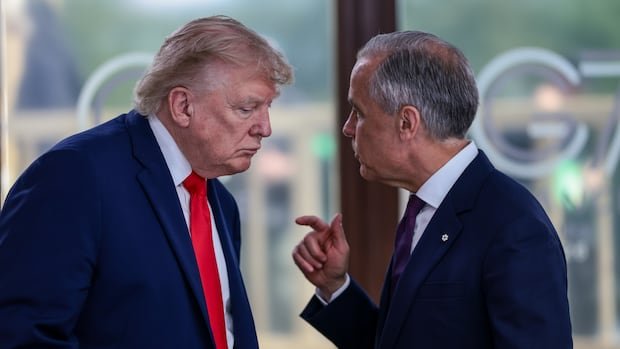

Canada is in the midst of ongoing negotiations with the United States to secure a trade agreement that would prevent the imposition of President Donald Trump’s looming tariffs, scheduled to take effect this week. Additionally, Canada is seeking relief from existing tariffs in key sectors. Despite multiple meetings between Canadian and American negotiators in recent weeks, the two countries find themselves deadlocked as the negotiations reach a critical stage.
Sources have revealed concerns among Canadian negotiators that the impending 50 per cent tariffs on numerous Canadian goods may be unavoidable, as Washington remains steadfast in its demands. Ottawa is focusing on persuading provinces to lift restrictions on American alcohol in a bid to ease tensions. The U.S. justifies its tariff actions by citing alleged discriminatory practices by Canada in the automobile, dairy, and alcohol sectors.
As the deadline for negotiations approaches, insights from CBC News shed light on the current state of Canada-U.S. trade talks across various sectors. In the automobile industry, the U.S. has proposed reducing existing auto tariffs from 25 per cent to 12.5 per cent, a move deemed insufficient by the Canadian side. Lana Payne, a Unifor representative and member of Prime Minister Mark Carney’s advisory committee, emphasized the need for a comprehensive deal without further concessions.
Regarding the dairy sector, longstanding criticisms from Trump over Canada’s supply management system continue to complicate negotiations. The White House accuses Canada of imposing stricter tariffs on U.S. dairy products compared to imports from the European Union. While Canada is expected to make concessions on dairy, such compromises could pose political challenges for the Carney administration, given the significance of the dairy industry in provinces like Quebec.
In the alcohol sector, Canadian negotiators are working to address provincial bans on U.S. alcohol sales, a key issue driving Trump’s tariff threats. The federal government has advised provinces to prepare for the potential reintroduction of U.S. alcohol products pending a trade deal. Notably, Ontario’s Premier Doug Ford has expressed willingness to lift the alcohol boycott if a fair deal is reached, particularly focusing on protecting key sectors like steel and automotive industries.
Canada is also pressing for reductions in existing U.S. tariffs on steel, aluminum, and copper, with various initiatives introduced to support these sectors. The federal government recently announced a $100 million program to subsidize transportation costs for Canadian steel producers. Efforts to address U.S. tariffs on Canadian softwood lumber face resistance from Washington, which prefers separate negotiations on this issue.
Moreover, discussions encompass critical minerals, energy, and security cooperation, with the U.S. seeking preferential access to Canadian resources. Canada’s strategic reserves of critical minerals like lithium and cobalt are of interest to the U.S. for national security and industrial policy objectives. The review of Canada’s F-35 fighter jet purchase from the U.S. remains under scrutiny, reflecting broader diplomatic and trade considerations.
In conclusion, the Canada-U.S. trade negotiations are at a critical juncture with key sectors such as automobiles, dairy, alcohol, steel, softwood lumber, and critical minerals shaping the discussions. The outcome of these talks will have significant implications for both countries’ economic interests and trade relations.