

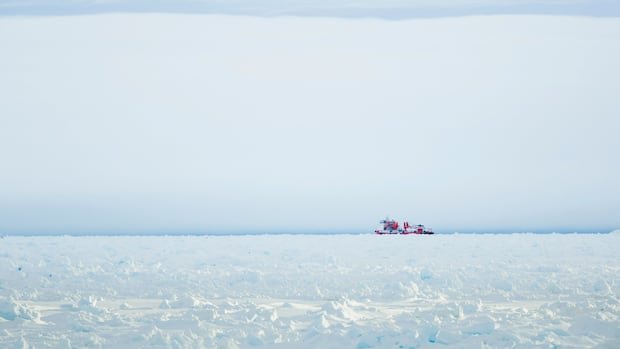

Canada and the United States have been discreetly monitoring two Chinese icebreaking research vessels in the Arctic waters near Alaska for the past few weeks. The ships named Xue Long (Snow Dragon) and Xue Long 2 ventured through the U.S. exclusive economic zone in the Bering Sea in July, as confirmed by the U.S. Coast Guard.
The presence of Chinese research vessels in the Arctic Ocean during summers in recent years has raised concerns among security and defense authorities. Data from Steffan Watkins, an independent research consultant and ship tracker, reveals that a Royal Canadian Air Force CP-140 surveillance aircraft has been in operation in Alaska since early July.
The Department of National Defence verified on Friday that the aircraft has been monitoring the activities of the two Chinese vessels alongside the Americans. The Canadian Joint Operations Command is actively observing maritime traffic in the Arctic, specifically focusing on the Xue Long and Xue Long 2 ships currently operating beyond Canada’s exclusive economic zone.
Last year, the Canadian military initiated efforts to enhance surveillance of northern waters and collaborate with Pacific allies in the Bering Sea off Alaska under Operation Latitude. The Royal Canadian Navy deployed the frigate HMCS Ottawa and the Arctic offshore ships HMCS Max Bernays and HMCS Robert Hampton Gray, in addition to the air force’s surveillance aircraft. Canadian Special Operations Forces Command personnel and the icebreaker CCGS Des Groseilliers are also participating in these operations.
Defence Minister David McGuinty emphasized that the Canadian military actively monitors the country’s waters and reiterated China’s claims of peaceful intentions with its Arctic research missions. Despite China’s stated objectives of scientific research and environmental monitoring, concerns have been raised about the potential dual-use nature of the advanced equipment deployed on the Chinese research vessels.
Richard Shimooka, a defense researcher, highlighted the multifunctional capabilities of these research ships and the significance of their advanced technology for tracking submarine activity. The monitoring of regional subsea networks and potential mapping activities by China in the Bering Sea region has drawn attention from Western defense officials.
Canada’s role in the western Pacific has become increasingly vital, especially as the U.S. Navy focuses on other global issues. However, limitations exist due to the aging fleet of Canadian naval vessels. The importance of investing in modernizing the fleet and enhancing surveillance capabilities in the Arctic region was emphasized during a recent visit by members of the House of Commons defense committee to the Arctic.
The federal government’s commitment to building new destroyers, acquiring Arctic-capable submarines, and deploying undersea sensor networks underscores the strategic importance of protecting Canadian sovereignty in the Arctic region. The need to strengthen defenses against potential threats from nations like Russia and China, who challenge Canada’s maritime claims in the Far North, has become a priority for national security.