


The secretive actions that led to the departure of U.S. President Donald Trump from a plane carrying journalists and some White House personnel in Turkey last month are unprecedented in modern history and have raised lingering queries.
After a NATO summit in Ankara, Trump was covertly moved from Air Force One to a military aircraft using a catering truck in a remarkable ruse prompted by an Iranian threat of assassination, as per U.S. media reports.
The White House did not reveal the change — despite reporters and some White House staff remaining on Air Force One — and the news only surfaced when the Washington Post broke the story on Monday.
Trump, who mentioned on Tuesday that he was following the instructions of the U.S. Secret Service, was accompanied by several close aides to the smaller military plane.
Former CIA director John Brennan — a vocal critic of Trump whom the president considers a foe worthy of prosecution — stated on Tuesday that the White House had an “ethical obligation” to inform the press pool.
“None of the presidents I worked for would have allowed the White House staff and a planeload of journalists to proceed if the threat had not been adequately addressed for the president,” Brennan told MS Now.
‘For old time’s sake’
Trump had initially flown to the summit in a newly renovated jet donated by Qatar but mentioned during the event that he would use the older Air Force One when departing for the U.K., citing nostalgia. This announcement sparked curiosity among the press due to Trump’s past criticisms of the two Air Force One planes in use since 1990.
The trip to Ankara marked the new plane’s first overseas voyage after rapid upgrades raised questions about its cost and security.
New York Times reporter Maggie Haberman suggested that there might have been an off-the-record discussion with the press regarding the arrangements that kept them off Air Force One.
“The press could have been informed later without jeopardizing anyone,” she said on the newspaper’s podcast The Daily on Wednesday.
A similar incident occurred in 2000 when President Bill Clinton used an unmarked executive jet to fly into Pakistan while sending Air Force One as a decoy, as recounted by Susan Page of USA Today to the Post this week.
“They informed me about the extraordinary security measures taken due to the risks of flying there, including the use of a decoy plane,” she said. “Of course, the risks also applied to the journalists covering the trip along with President Clinton.”
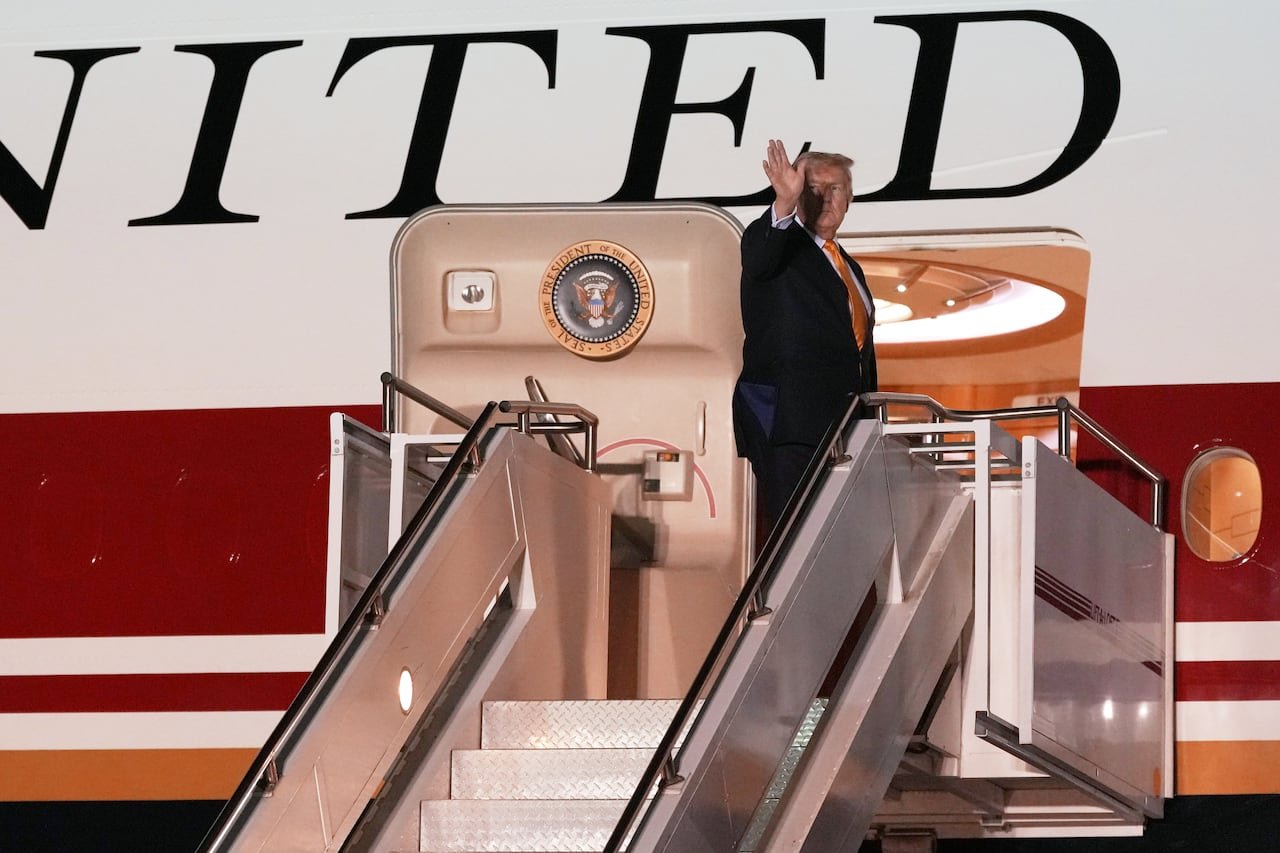
It is unclear whether a similar tactic was considered by the Trump White House, which has a strained relationship with various media outlets. The administration previously sought to subpoena some of Haberman’s colleagues at the Times when they reported on security concerns regarding the Qatari jet but backed off after facing criticism from a federal judge.
Haberman expressed unease upon learning about the plane switch, although it remains uncertain if the reporters were in actual danger.
The traditional Air Force One undergoes security checks before boarding and is equipped with advanced defensive systems like flares, electronic jammers, and infrared detection systems to defend against missile attacks, although the effectiveness of these systems is unknown.
Trump suggested to reporters late Tuesday that the decoy plane was probably safer than the U.S. Air Force C-32A he used to travel to England. It is unclear if the plane the press traveled on received any military escort.
Democrats seek clarification
While there is no law requiring the president’s whereabouts to be disclosed at all times, the press typically has an idea of the day’s schedule.
An exception was the day of the 9/11 attacks on U.S. soil, when it took hours before the press and the public learned of President George W. Bush’s movements from a Florida school to an air force base in Nebraska, with no misdirection involved but a delay due to extraordinary circumstances.
A threat was present on this occasion as highlighted in a late Tuesday editorial by the Wall Street Journal.
<p