

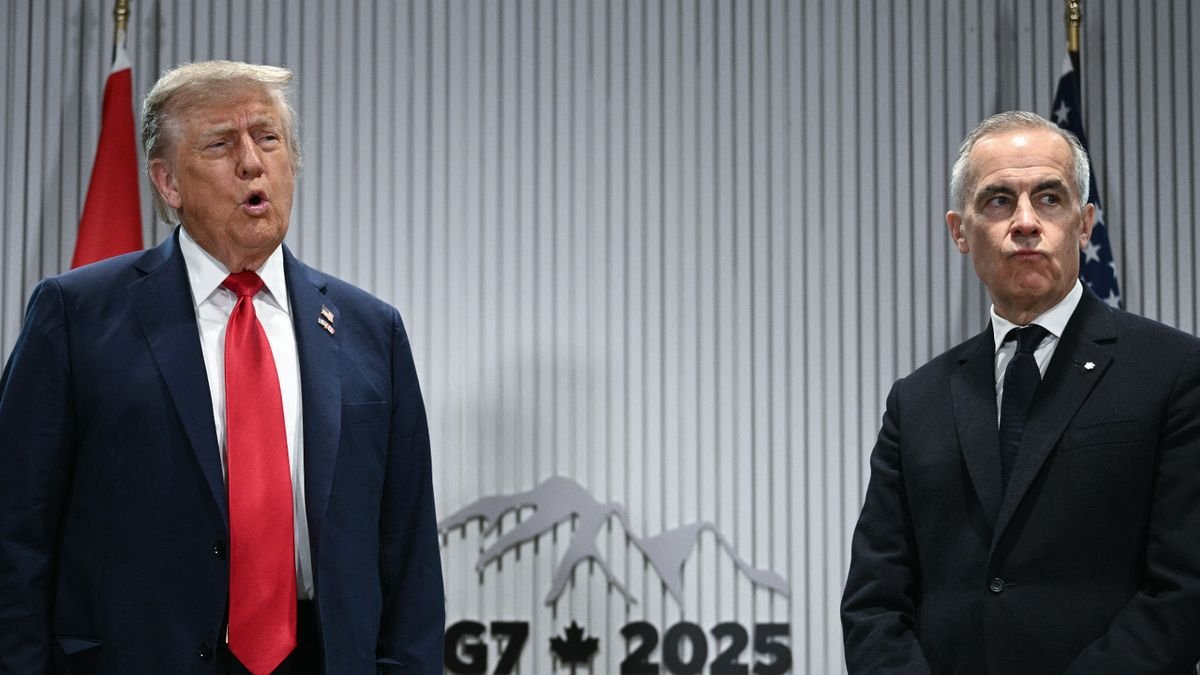

Canada’s Prime Minister issued a concerning alert about his country’s security in light of Donald Trump’s threats to consider Canada as the 51st state. Mark Carney traveled to Beijing to meet with Chinese leaders and business figures, finalizing a significant agreement aimed at reducing Canada’s dependence on the United States during a period of global trade disruptions.
Carney emphasized the evolving security landscape and the necessity of managing various threats through alliances. Despite the US being Canada’s primary trading partner, recent developments indicate a rekindling of relations with China, its second-largest economic partner. The newly signed trade deal with China includes the import of thousands of Chinese electric vehicles into Canada in exchange for reduced tariffs on agricultural goods.
The economic pact is viewed as a strategic move in the face of shifting global dynamics, further diversifying Canada’s trade relationships. This development underscores a departure from the traditionally strong bond between the US and Canada, which has experienced strain under the current US administration.
Following the imposition of tariffs by Trump on Canadian goods and subsequent political tensions, the US President even threatened to escalate tariffs by an additional 10% after a province ran an anti-tariff advertisement featuring Ronald Reagan. Carney later issued an apology to Trump regarding the incident.
Further exacerbating the situation, Trump made bold statements about potentially annexing Canada as a US territory. This proposal was met with resistance, with Trump also expressing ambitions to acquire Greenland to counter Chinese and Russian influence in the region. Denmark, the current custodian of Greenland, firmly rejected any sale of the island, prompting continued diplomatic tensions.
Despite pushback from Denmark, Trump has persisted in his pursuit of territorial ambitions, causing concern among allies and further complicating international relations.