

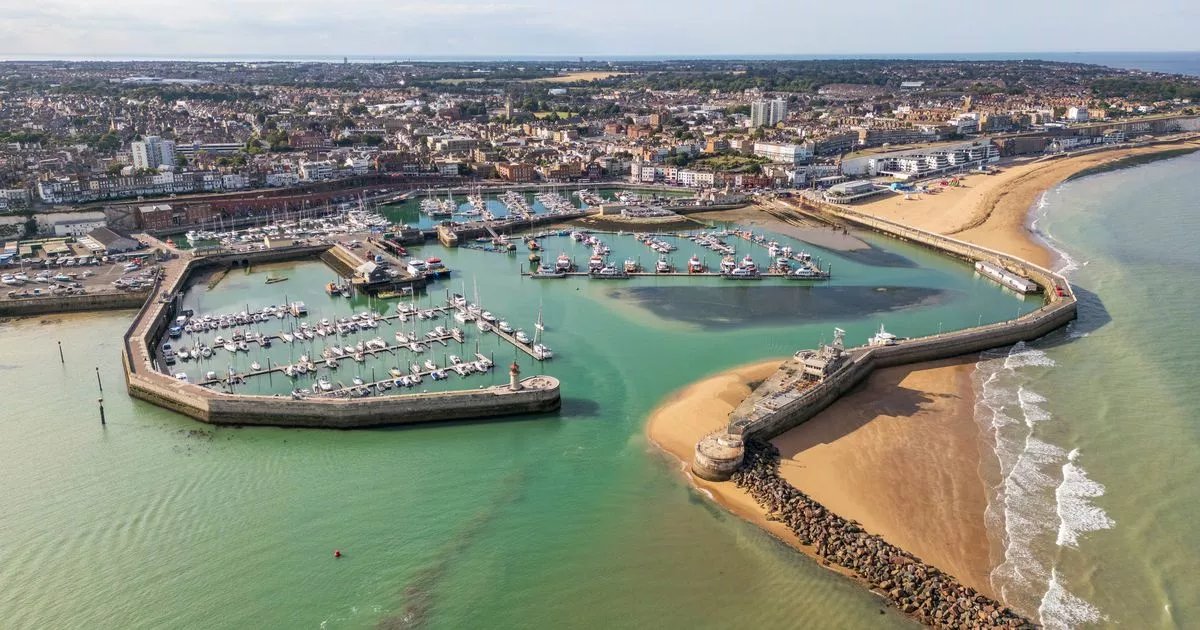

The decline of a renowned British seaside town is evident as vacant storefronts line the main street and visitors opt to stay away.
Typically, thoughts of British coastal towns evoke visions of sandy beaches, the scent of fish and chips in the air, the sound of arcade games, and of course, indulging in ice cream. While many coastal resorts across the UK offer this traditional experience, the reality for numerous seaside communities is far more challenging economically compared to inland areas. Data shows that average wages in most coastal towns are lower than their respective counties, funding disparities leave coastal children with fewer resources than urban counterparts, and health issues like obesity, smoking, and substance abuse are more prevalent in coastal areas compared to the national average.
Ramsgate, a coastal town in Kent, exemplifies this struggle. Recent reports from Kent Online revealed that nearly a quarter of the town’s shop units, totaling 65, are vacant, surpassing the national average of one in seven empty shops. Local businesses, like the longstanding pet shop Sherley’s on Queen Street, are feeling the strain, with owner Jack Gilhooly expressing concerns about the town’s economic decline and the challenges faced by businesses in Ramsgate.
Efforts to revitalize Ramsgate are underway, with initiatives like Ramsgate Space actively identifying and supporting businesses to fill vacant spaces. Additionally, the Kent County Council has transformed the once-derelict Old Wine Warehouse into functional spaces like Ramsgate Works, a café area, and a performance venue, aiming to attract businesses and visitors to the area.
While Ramsgate grapples with economic hardships, neighboring towns like Deal, Margate, Broadstairs, and Whitstable are enjoying a resurgence, drawing in visitors with trendy shops, dining options, and attractions. The contrast in economic fortunes between Ramsgate and its neighboring towns has left locals questioning why some areas thrive while others struggle.