

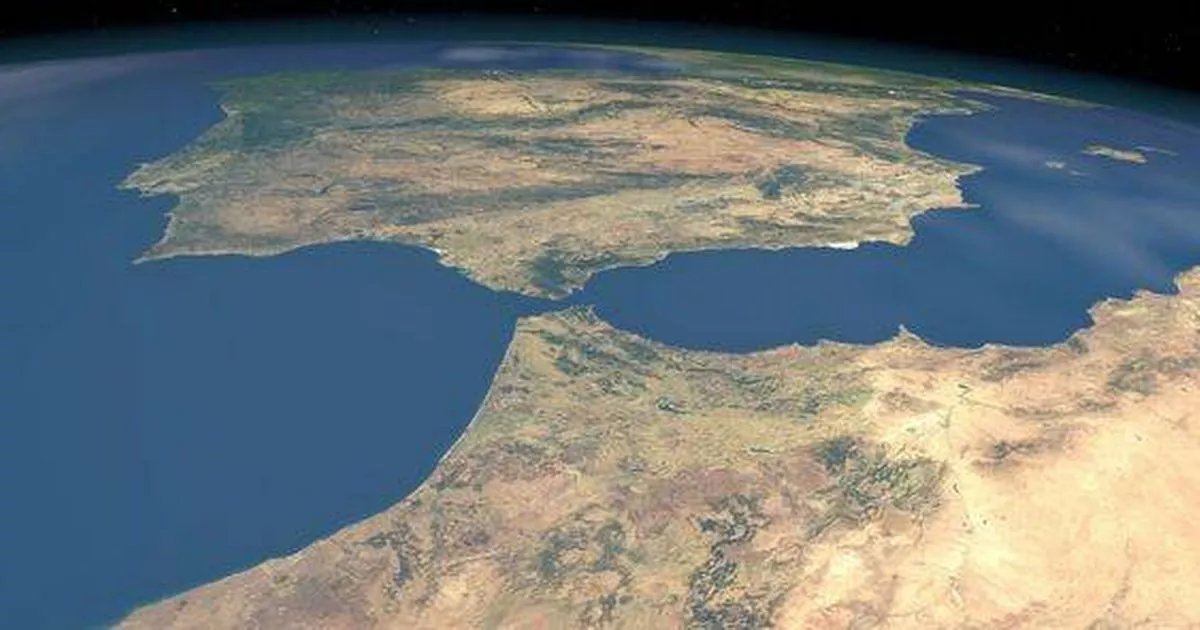

A massive underwater tunnel that would connect Europe and Africa may soon become a reality following a significant development. Spain has reignited this ambitious project, which involves drilling a railway tunnel beneath the Strait of Gibraltar, with scientists confirming its technical feasibility. A recent study by German tunnel experts Herrenknecht, commissioned by the Spanish Government, determined that constructing the tunnel using current technology is achievable. Ineco, a Spanish consultancy firm, has been assigned to draft a blueprint for the project by the end of next year, aiming for potential government approval as early as 2027.
The idea of establishing a man-made link between the two continents emerged in the 1970s and has resurfaced sporadically in political campaigns and government agendas over the years. The proposed tunnel, inspired by the Eurotunnel that connects Britain and France, would stretch beneath the nine-mile expanse between southern Spain and Morocco. The estimated cost of the project is €8.5 billion (£7.4 billion), according to Voz Populi.
The tunnel would consist of two separate railway tunnels for one-way train traffic, linking Punta Paloma in Cadiz to Cape Malabata near Tangier in Morocco. It is projected to cover approximately 26 miles, with nearly 17 miles underwater. The tunnel’s depth is anticipated to reach 1,540 feet, surpassing the depth of the Channel Tunnel. Once operational, the journey by train is expected to take around 30 minutes, accommodating both high-speed AVE passenger trains and freight.
The project faces significant engineering challenges due to its location at the intersection of the Eurasian and African tectonic plates along the Azores-Gibraltar fault line. Fieldwork is anticipated to begin in 2030 if approved, with the main construction phase scheduled between 2035 and 2040, though these timelines are subject to change.
Initial plans aimed to complete the tunnel by 2030, aligned with the FIFA World Cup co-hosted by Spain, Portugal, and Morocco. However, experts now consider this timeline unrealistic given the project’s complexity and current preliminary stage. The proposed route from Punta Paloma to Cape Malabata was chosen after discarding previous proposals, such as a suspension bridge, due to the strait’s depth, seismic activity, and extreme wind conditions.
The project is a collaborative effort between SECEGSA and SNED, Spanish and Moroccan organizations, respectively, working towards establishing a reliable rail connection for passengers and freight between Europe and North Africa.