

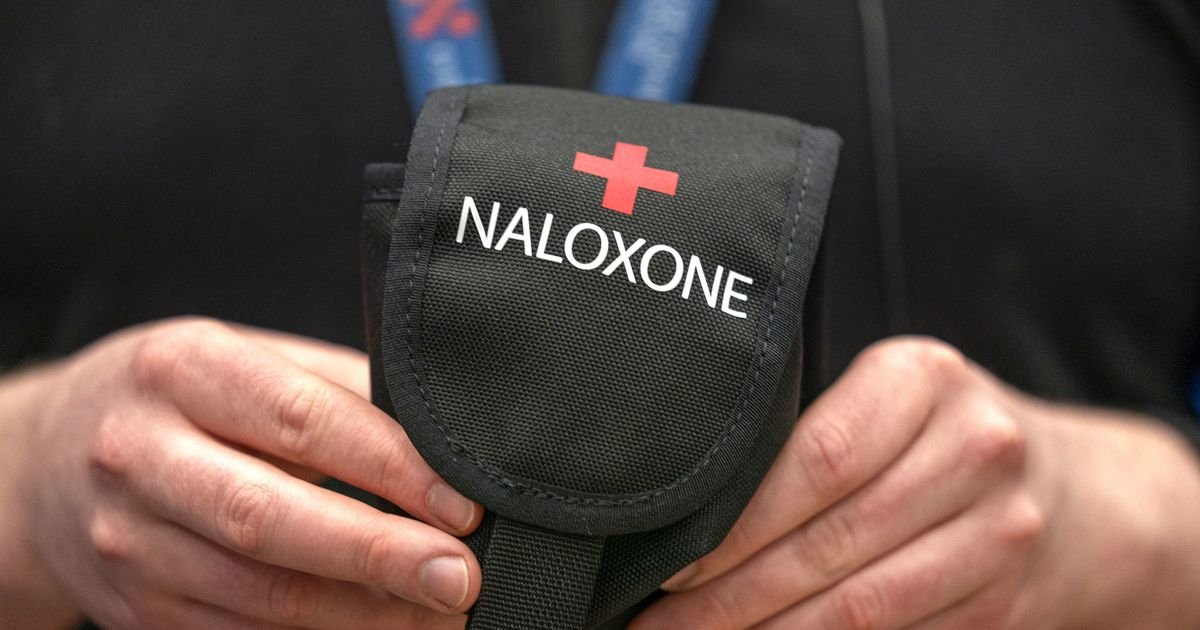

The government has announced plans to increase the availability of a life-saving drug overdose treatment in homeless shelters and to the general public.
Officials will seek feedback on providing naloxone, a prescription medication that can temporarily reverse opioid overdoses, to hostels, day centers, and facilities for individuals experiencing homelessness or rough sleeping. Additionally, they will explore options to deliver naloxone to emergency personnel at organizations such as Border Force and the National Crime Agency, and to make it more accessible by installing emergency boxes in public areas similar to defibrillator cabinets.
Health Minister Karin Smyth emphasized the importance of naloxone in preventing drug-related deaths, highlighting its effectiveness in reversing opioid overdoses and enabling individuals to seek necessary treatment.
In a recent move, the government expanded the group of emergency service professionals authorized to provide take-home naloxone to include police officers, paramedics, and probation workers, with the aim of saving more lives. This initiative aligns with the government’s commitment to allocate £3.4 billion towards drug and alcohol treatment services.
According to the Department of Health and Social Care (DHSC), drug-related deaths have doubled since 2012, with a record 5,448 fatalities reported in England and Wales last year. Deaths involving synthetic opioids like nitazenes have also seen a significant increase, rising from 25 deaths in 2023 to 180 in 2024.
Sean Palmer, the Executive Director of Strategy and Transformation at St Mungo’s, praised the decision to enhance access to naloxone, emphasizing its vital role in supporting individuals facing homelessness and opioid use. Palmer highlighted the impact of naloxone in saving lives and providing a pathway for individuals to recover and overcome homelessness.
He further noted the rising risks associated with opioid use, stressing the importance of naloxone in St Mungo’s services where staff are trained to respond to overdoses and have successfully intervened to save lives. Palmer underscored the significance of addressing substance use as a coping mechanism for individuals experiencing complex physical and mental trauma, which can be both a cause and consequence of homelessness.