

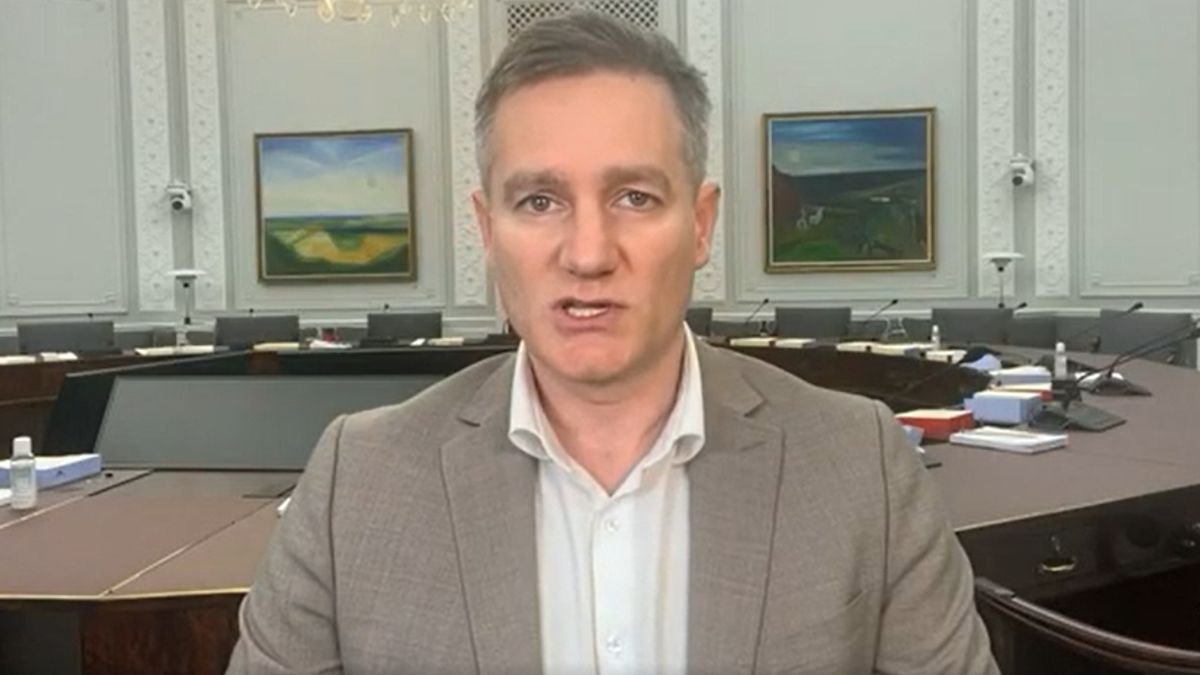

Danish Parliament Member Raises Concerns Over Potential US Invasion of Greenland
A Danish MP has raised alarm, suggesting that if the US were to pursue an unprecedented invasion of Greenland, no one would be safe. This warning comes amidst escalating concerns over an imperialistic approach within the Donald Trump administration’s “America First” agenda.
Rasmus Jarlov issued this stark message in response to Trump’s repeated indications of annexing Greenland, a Danish territory. Trump and several administration officials argue that Greenland, being geographically closer to the US than Denmark, holds strategic importance for national security.
While current treaties allow the US to station troops in Greenland and benefit from favorable resource extraction agreements, there has been a decrease in American military presence on the island post-Cold War.
Jarlov cautioned that if Trump followed through with his invasion threats towards a loyal ally like Denmark, it could set a dangerous precedent for other European nations with territories in the Americas, including the UK. He emphasized the unpredictability of American aggression targets and its potential implications on global stability.
The Danish MP expressed concerns over the impact of such actions, highlighting the potential destabilization of the Western world and the risks posed to countries with overseas interests.
Commenting on Trump’s “Donroe Doctrine” reference after the capture of Venezuelan leader Nicolas Maduro, Jarlov emphasized the gravity of a potential conflict arising from a US invasion of Greenland, labeling it as self-inflicted damage of unprecedented proportions.
Despite acknowledging the slim likelihood of a direct invasion, Jarlov speculated that the US might attempt to influence public opinion in Greenland through economic incentives. He underscored that any coercive tactics would be unacceptable and likely face resistance from the local population.
A recent survey by pollster Verian revealed that only six percent of Greenlanders favored joining the US, with a significant majority opposing the idea. This data suggests strong local sentiment against any shift in sovereignty.
Cookie Notice: Our site uses cookies and identifiers to enhance user experience, analyze site usage, and provide personalized ads. You can manage your data preferences by clicking the “Do Not Sell or Share my Data” button. By using our services, you agree to our Cookie Policy, Privacy Notice, and Terms and Conditions.