

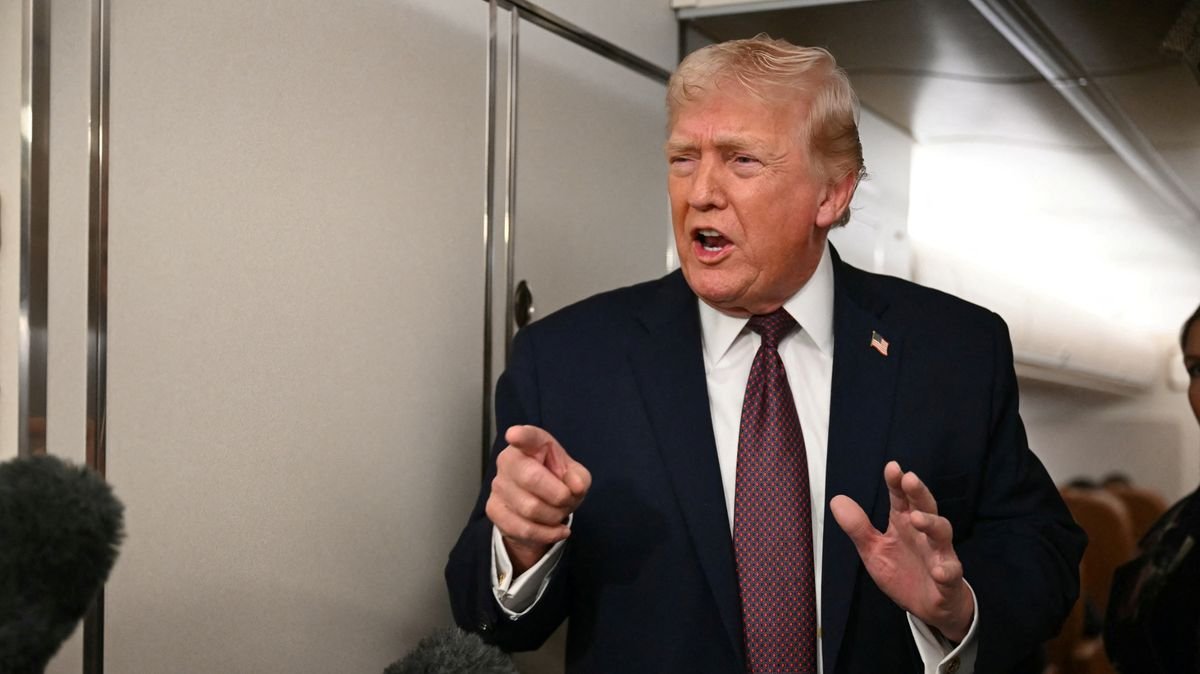

President Donald Trump has indicated that Iran is interested in engaging in negotiations following his recent warning to the country amidst reports of at least 544 casualties in ongoing protests.
Iran has not yet responded publicly to Trump’s statement. However, the visit of Oman’s foreign minister to Iran this weekend, a country known for facilitating communication between Washington and Tehran, suggests potential diplomatic efforts. It remains uncertain what concessions Iran could offer, given Trump’s stringent demands regarding their nuclear program and ballistic missile arsenal, which Iran considers vital for its national security.
Iran’s Foreign Minister, Abbas Araghchi, denounced Israel and the U.S. for the violence during a speech to foreign diplomats in Tehran. Araghchi blamed external forces for instigating the unrest, alleging a plot to provoke American intervention. He made these remarks during a speech broadcast by the Qatar-funded Al Jazeera network, which is operating within Iran despite the internet shutdown.
In response to the protests challenging the authority of Supreme Leader Ayatollah Ali Khamenei, Iran has called for pro-government demonstrations to display support for the ruling regime. The state TV aired footage of crowds chanting anti-American and anti-Israeli slogans in a show of loyalty to the government.
Amidst escalating tensions, Trump and his national security team are reportedly considering various options against Iran, including cyberattacks and potential military strikes by the U.S. or Israel. Trump emphasized the seriousness of the situation, stating that the military is exploring robust responses to the crisis.
While Trump expressed willingness to arrange a meeting with Iranian officials, he cautioned that decisive action may be necessary given the escalating death toll and crackdown on protesters in Iran. He mentioned that Iran has shown interest in negotiations, but the U.S. administration is prepared to take action as needed.
The Iranian parliament speaker has issued a warning that the U.S. military and Israel could become “legitimate targets” if force is used to suppress demonstrators. The protests have resulted in over 10,600 arrests, with reports indicating 544 casualties, including both protesters and security personnel.
The absence of internet access and restricted communication channels in Iran has made it challenging to assess the situation accurately. Concerns are growing that the lack of information may embolden hardliners within the security apparatus to escalate the crackdown on protesters. Despite the restrictions, videos circulating online indicate continued demonstrations in various parts of Iran.
Authorities in Iran have issued warnings through text messages, advising citizens to avoid participating in protests due to alleged threats of violence and terrorist activities. The messages underscore the government’s resolve to maintain order and prevent further unrest.
The protests initially sparked by economic grievances have evolved into broader challenges against Iran’s political establishment. The demonstrations began in late December, triggered by the sharp devaluation of the Iranian currency and exacerbated by the economic impact of international sanctions imposed on Iran.
For more news updates, consider selecting Daily Mirror as a ‘Preferred Source’ on Google News for convenient access to relevant information.