

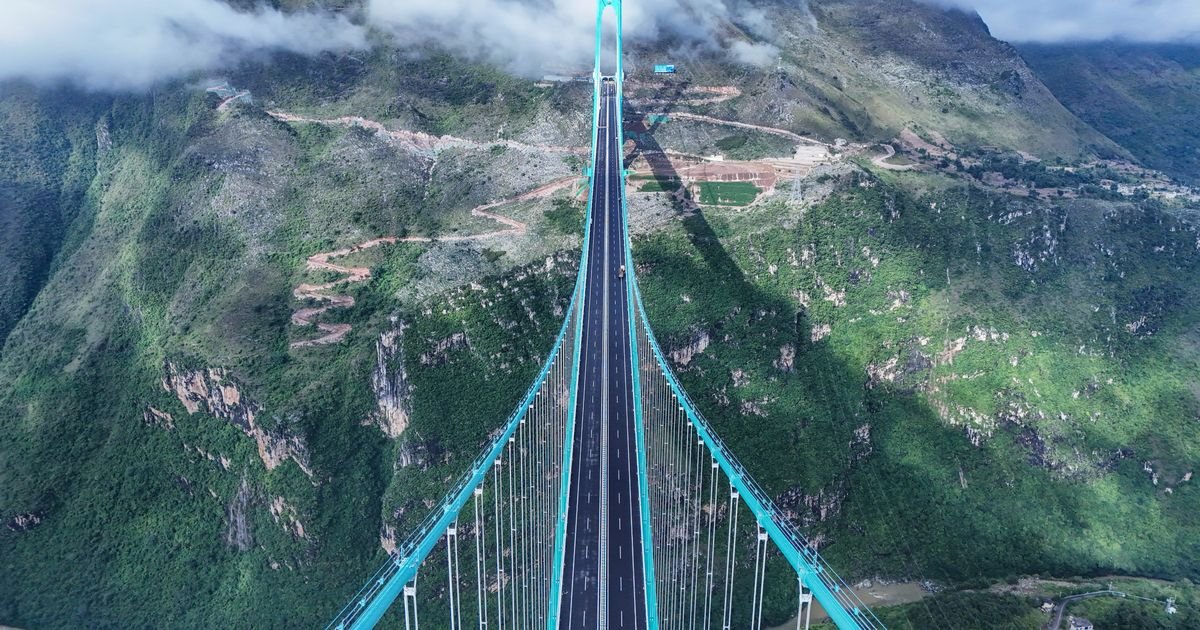

A fear of heights is not uncommon, and some bridges around the world can intensify that terror. These bridges vary in design, with some serving as artistic masterpieces while others are more utilitarian in appearance. Despite their practical importance for travel, some bridges are undeniably terrifying. From a glass-bottom suspension bridge to a rickety wooden plank pathway, these structures rank among the scariest in the world.
One example is the Zhangjiajie Glass Bridge in China, a pedestrian bridge made of thick glass panels that offers a dizzying view of the Karst valley from its 300-meter height. Another hair-raising structure is the wooden-plank suspension bridge spanning the Arkansas River in the U.S., suspended 956 feet above the ground with an amusement park at both ends.
China boasts the tallest bridge globally, the Huajiang Canyon Bridge, towering 625 meters above the Beipan River. This bridge is not for the faint of heart, as it offers extreme activities like bungee jumping and slack-lining. In contrast, Japan’s Kazurabashi Bridge, made of tree vines, sways in the wind over the Iya River, providing a nerve-wracking crossing experience.
The Millau Viaduct in France, crossing the Tarn Gorge, was once the tallest bridge until it was surpassed by the Huajiang Canyon Bridge. Despite losing its title, the Millau Viaduct’s height and cloud-engulfed appearance still evoke fear. Similarly, the Trift Bridge in the Swiss Alps, suspended 100 meters above a glacier-formed lake, is one of the highest pedestrian suspension bridges in the region.
For a different thrill, the Kakum Canopy Walkway in Ghana offers a wobbly 250-meter walk at a height of 40 meters in Kakum National Park. Closer to home, the Carrick-a-Rede Rope Bridge in Northern Ireland, originally built by salmon fishermen in 1755, dangles nearly 30 meters above sea level, enticing brave visitors to test their nerves on its swaying pathway.