

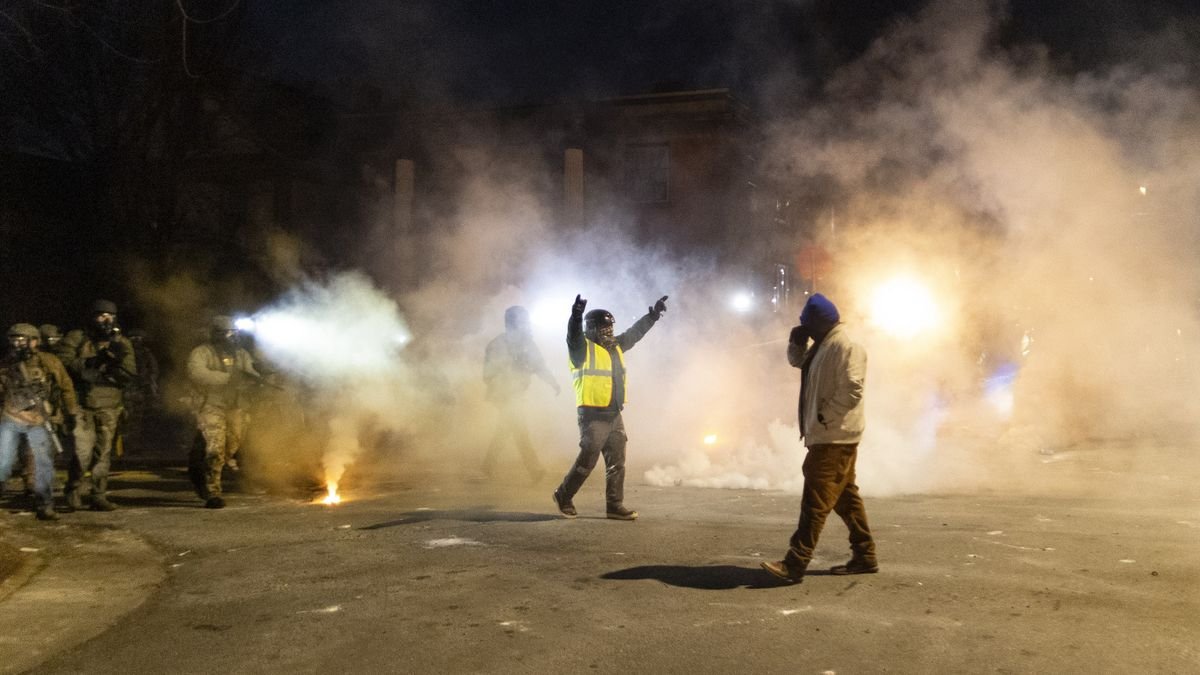

An ICE agent was involved in a shooting incident, marking the second such occurrence in Minneapolis within a fortnight since the tragic death of Renee Good. The city experienced unrest after the federal officer shot a man in the leg, further escalating tensions already fueled by the fatal shooting of Ms. Goode by Officer Jonathon Ross on January 7.
City leaders in Minneapolis have urged for calm and reiterated their demand for the immediate departure of the organization from the city and state, as images depict sparks flying amidst the turmoil.
In a statement with evident political undertones invoking Joe Biden, the Department for Homeland Security disclosed that the victim was a Venezuelan migrant who allegedly attempted to assault an ICE officer.
According to a department spokesperson, the altercation transpired during a targeted traffic stop around 6:50 pm CT, involving an individual released into the country by Joe Biden. The department claimed the individual tried to flee, resulting in a car crash and subsequent escape on foot.
The spokesperson further stated that the immigrant resisted and attacked the officer when confronted, with two others allegedly joining in the assault using a snow shovel and broom handle. In response, the officer fired his weapon, claiming it was in self-defense as the situation escalated.
Both the officer and the initial subject of the traffic stop were reported to be hospitalized. The city confirmed that the injured man received treatment for non-life-threatening injuries.
The DHS defended the actions of ICE, blaming public resistance for the confrontations, amid increasing incidents involving the agency and American citizens. The department criticized Governor Walz and Mayor Frey for allegedly encouraging resistance against ICE and federal law enforcement officers.
Minnesota is currently hosting around 3,000 ICE agents, intensifying following the recent events. Minneapolis Mayor Jacob Frey criticized the agency for instigating chaos, while Governor Tim Walz denounced the deployment as an “occupation,” reflecting the ongoing tensions between the state and federal authorities.