

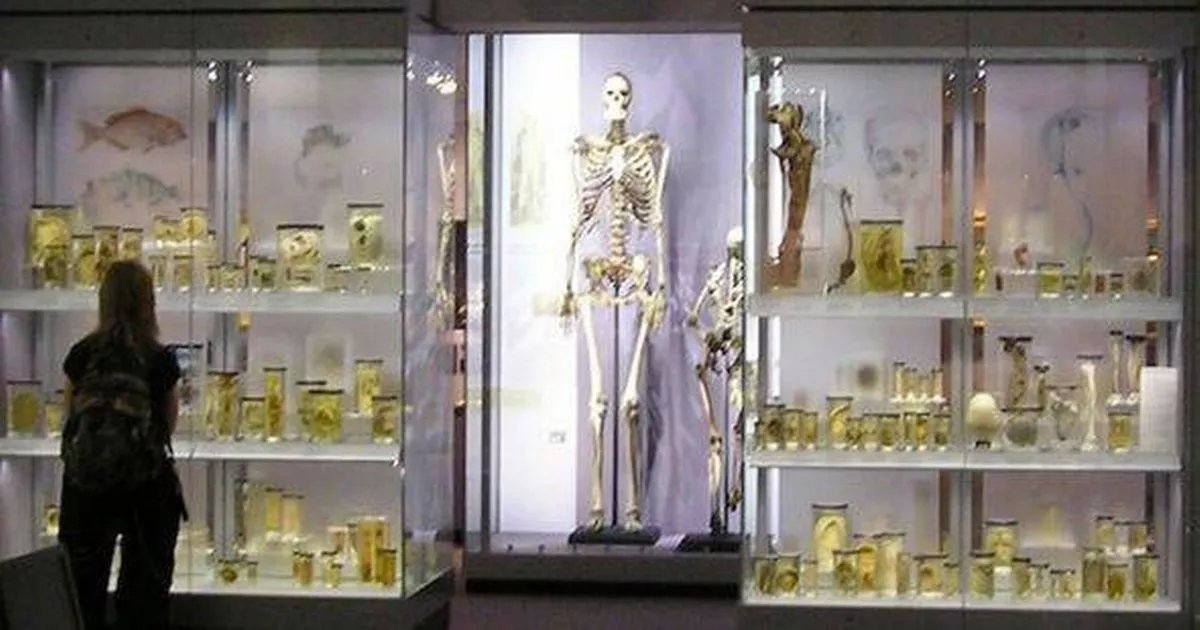

Nestled within a picturesque London square, surrounded by magnificent Georgian buildings, stands the historic Royal College of Surgeons, a 200-year-old edifice with a surprising secret – it houses one of Britain’s most intriguing museums.
The Hunterian Museum, located within the Royal College of Surgeons, showcases a diverse collection of anatomical specimens, both human and animal, sure to captivate, educate, and sometimes startle its visitors. The museum also pays tribute to medical pioneers through artworks and sculptures depicting their groundbreaking contributions to modern surgery.
Numerous galleries within this free-admission museum exhibit towering shelves filled with jars containing a variety of extraordinary specimens, many of which are from the animal kingdom, preserved for scientific study.
In a somewhat controversial move, the collection includes human remains, such as foetuses, which may provide a disquieting experience for those with sensitive sensibilities. The museum website warns visitors about the emotional impact of viewing human remains and suggests that individuals consider their comfort level before visiting.
Visitors are requested not to take photographs of human remains or share such images on social media. The museum acknowledges the individuals, known and unknown, whose contributions to medical knowledge are represented in the displays, even though some specimens were acquired before modern consent standards were established.
A significant point of contention at the museum was the display of Charles Byrne’s skeleton. Despite Byrne’s explicit wish to be buried at sea to avoid body snatchers, his skeleton was acquired by the museum and exhibited for over two centuries before finally being removed in 2023 following extensive campaigns.
Other notable exhibits include teeth extracted from soldiers of the Battle of Waterloo, Winston Churchill’s former false teeth, and a macabre relic from Britain’s first mummy dissection in 1763, which features a preserved severed foot.
One of the museum’s eerie yet captivating displays is the Evelyn Tables, among Europe’s oldest anatomical preparations. These wooden slabs intricately showcase various parts of the human body, such as arteries, nerves, and veins, dissected, assembled, and varnished for educational purposes.
The museum also features surgical tools from the pre-anaesthesia era, offering a chilling glimpse into the grisly reality of surgery before modern medical advancements. Witnessing an 18th-century amputation kit or a dental set highlights the stark contrast between historical medical practices and contemporary healthcare.
The Hunterian Museum is open to visitors from Tuesday to Saturday, between 10 am and 5 pm, with free admission. To avoid potential crowds, it is recommended to book a slot online, especially during peak visiting hours.