

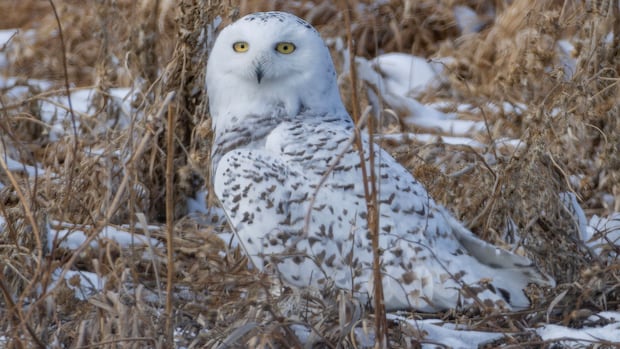

Following its classification as threatened in Canada by a federal committee last year, the snowy owl has now been recognized as a “sensitive species” by the government of Alberta.
These striking white raptors migrate annually from their Arctic breeding habitats to regions like Alberta, where they find ample rodent prey in the expansive Prairie landscapes.
The general status listing of Alberta’s wildlife species is refreshed every five years, and the most recent update released on October 21 indicates that three avian species previously deemed “secure” have now been classified as “sensitive species” in the province: snowy owls, mountain bluebirds, and hermit thrushes.
The provincial authorities did not elaborate on the reasons for the change in status for these three bird species.
In a statement provided to CBC News, Andrew Livingstone, communications director for Alberta Environment and Protected Areas, indicated that all three species have experienced a decline in numbers over the last ten years, as evidenced by data from the Breeding Bird Survey and Christmas Bird Count.
According to Livingstone, “A sensitive designation signifies that a species is not currently at risk of extinction or extirpation, but may require focused attention or protection to prevent it from becoming at risk.”
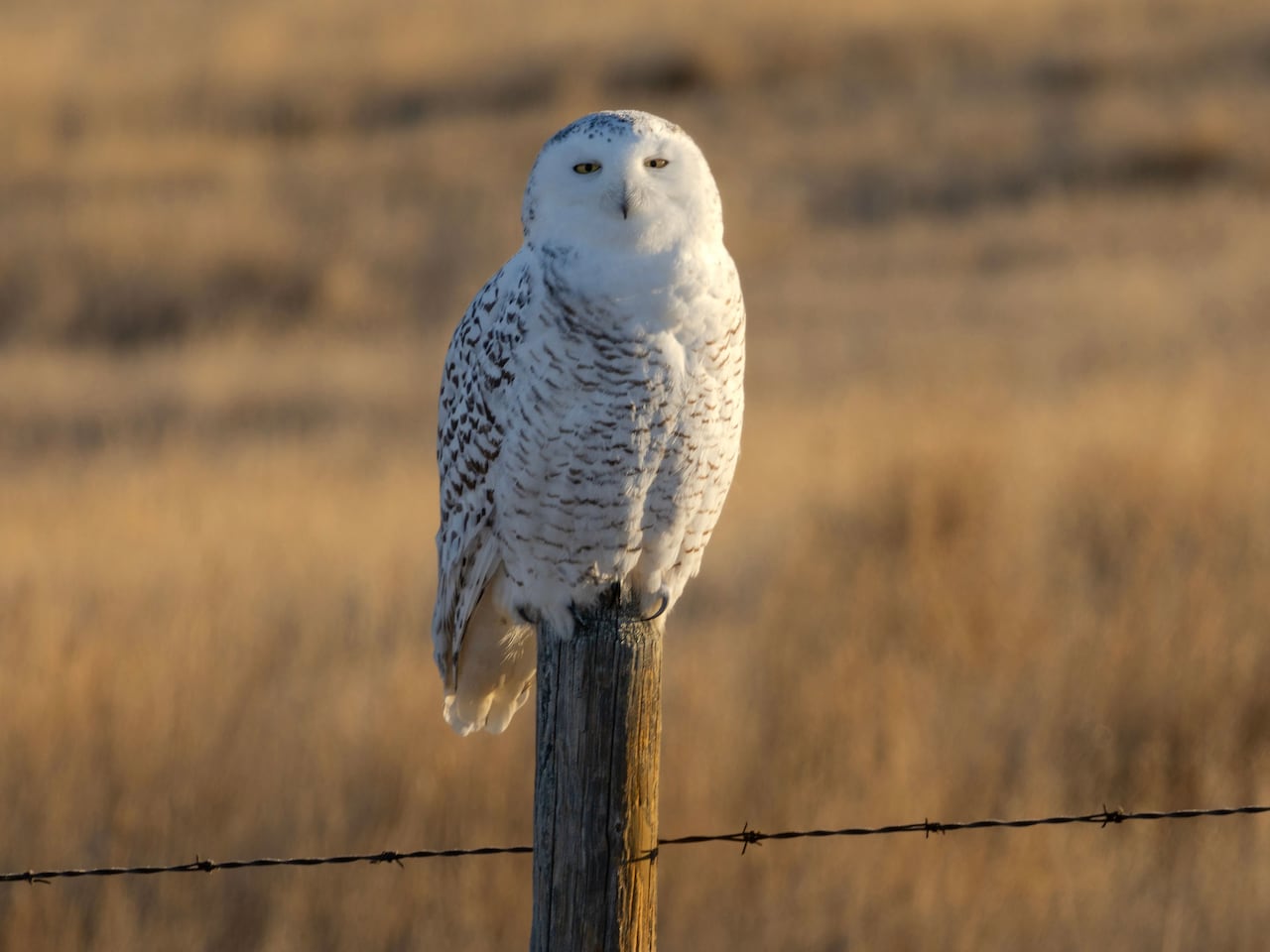
A snowy owl spotted in southern Alberta, where these birds are often seen hunting in open fields during their winter migration. Each year, snowy owls travel from the Arctic to various locations throughout Canada and the U.S. (Amir Said/CBC)
Much of the information regarding snowy owl populations is derived from the annual Christmas Bird Count, a citizen science project in which thousands of volunteers across Canada tally all the birds they observe in designated areas each year.
As reported by The State of Canada’s Birds, a collaborative effort by Birds Canada and Environment and Climate Change Canada, snowy owl populations have decreased by approximately 56 percent since 1970.
- Snowy owls return to Prairies for winter with new status as threatened species
- Why an Arctic icon, the snowy owl, must wait so long for legal protection
Colin Weir, managing director of the Alberta Birds of Prey Foundation wildlife rehabilitation centre located in Coaldale, notes that his organization has witnessed this population decline firsthand.
“Ten or fifteen years ago, we would receive several injured snowy owls each fall, winter, and spring,” he stated. “However, in the last two or three years, we haven’t had a single snowy owl arrive at our facility.”

Colin Weir, managing director of the Alberta Birds of Prey Foundation, poses with a flightless snowy owl, one of two that became permanent residents after being struck by vehicles. (Amir Said/CBC)
Weir attributes climate change as a likely primary factor contributing to the decline in snowy owl populations.
While avian flu and vehicle collisions are known causes of snowy owl deaths, he believes that conditions in their wintering areas in Alberta are unlikely to have “a significant impact on their populations” compared to environmental issues in the Arctic, where they breed.
- Here’s how Alberta zoos are protecting birds from avian flu
- Endangered barn owl makes ‘extremely rare’ appearance in Calgary
According to Weir, vehicle accidents are the primary reason snowy owls require rescue in Alberta, and he emphasizes that the best way to assist them is to be vigilant while driving — and for birdwatchers eager to capture images, maintaining a respectful distance is crucial.
“There are many people observing them, of course,” Weir remarked. “It’s important to watch them from afar, using spotting scopes and binoculars, without pursuing them, as getting too close can cause a snowy owl to become anxious and fly into the path of an oncoming vehicle.”
- Young owls in Calgary at risk of ‘unethical’ photography practices
- Birdwatchers flock to Calgary park to catch glimpse of rare woodpecker
Livingstone, the spokesperson for the province, explained that “this change does not immediately activate protective measures through Alberta’s Species at Risk Program.”
“However, it does highlight these species for potential thorough status evaluations in the future and for further attention during processes like land management planning.”
- Alberta removes habitat protections for endangered greater sage grouse to support industrial development
- Calgary recertified as ‘bird friendly city’ for supporting local and migratory birds
During their winter migration, snowy owls can be found in all Canadian provinces.
The State of Canada’s Birds estimates the snowy owl population at approximately 15,000 individuals in the country, which accounts for more than half of the estimated global population of 29,000.
The International Union for the Conservation of Nature categorizes the global snowy owl population as vulnerable.
Mountain bluebird, hermit thrush now also ‘sensitive species’
Two smaller songbirds that were previously classified as “secure” are now designated as “sensitive species” in Alberta.
The mountain bluebird, despite its name, is found throughout the Canadian Prairies and is cherished by many for its vibrant blue feathers.

Three species of bluebirds exist in North America, with the mountain bluebird being the only one native to Alberta. (Amir Said/CBC)
Jody Allair from Birds Canada notes that one of the threats to these birds is a decrease in insect populations, their primary food source, resulting from pesticide and herbicide use.
The new provincial classification of mountain bluebirds aligns more closely with trends observed across the country, according to Allair.
The State of Canada’s Birds indicates that mountain bluebird populations in Canada have dropped by 60 percent since 1970.
- Bluebird numbers have plummeted. Here’s how Albertans are helping them recover
- Grassland birds in crisis on the Canadian Prairies, conservationists warn
The hermit thrush, a relative of the more familiar American robin, is found throughout Alberta, though it is often heard rather than seen.
According to Allair, “Hermit thrushes may have one of the most beautiful bird songs in the world.”
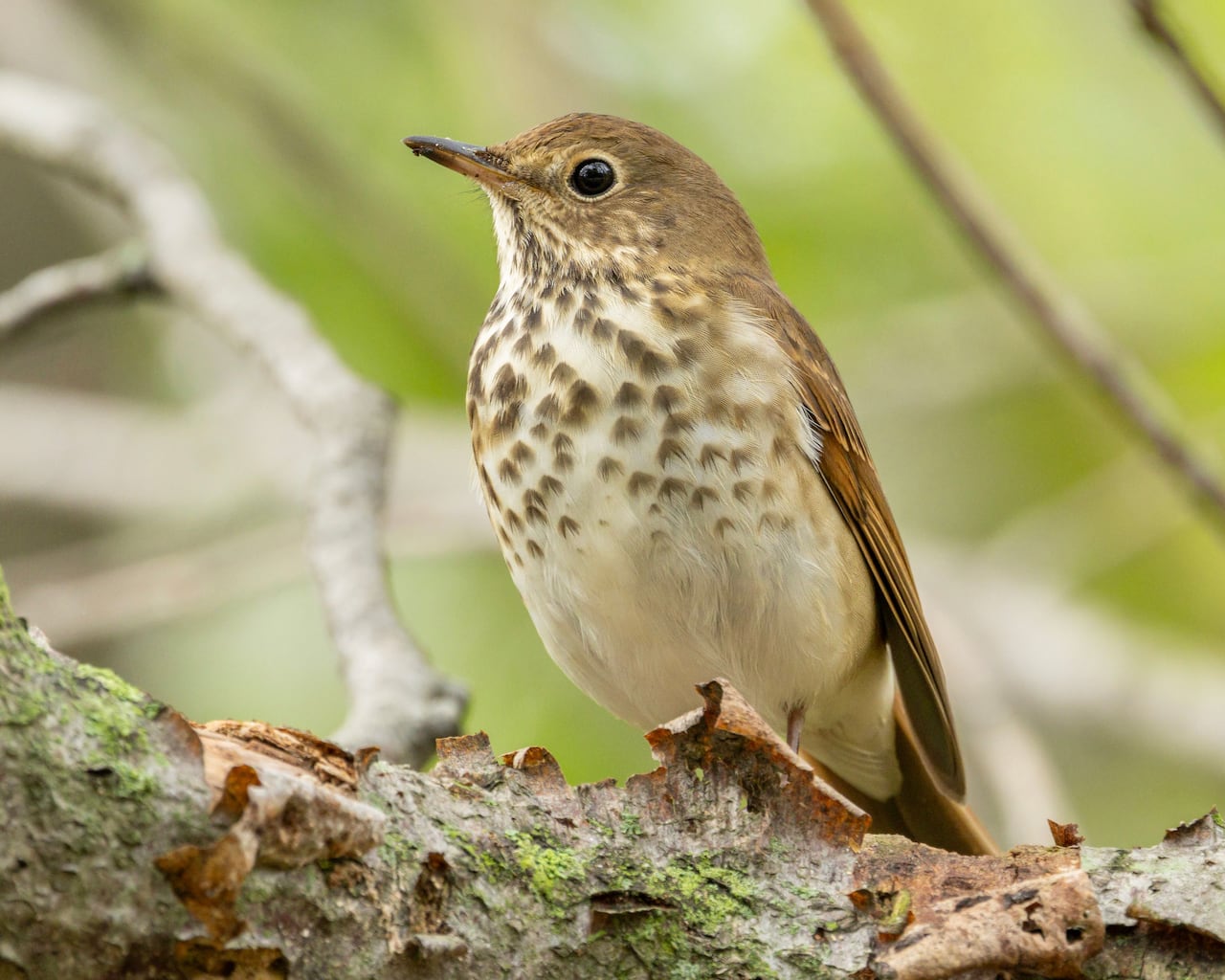
The hermit thrush is more commonly heard than seen in Alberta’s forests. (Amir Said/CBC)
The State of Canada’s Birds indicates that the hermit thrush has seen a population decrease of 54 percent across Canada; however, due to inconsistent data from various surveys, Birds Canada expresses “low confidence” in this estimate.
Previous data suggested that the population of this bird was actually on the rise in Canada. According to those findings, the hermit thrush is especially susceptible to habitat loss and fragmentation because it prefers forest interiors.
Allair emphasized, “Canada is home to 79 percent of the global population of this species, which means we have a significant responsibility for its conservation in Canada.”
- The haunting call of Canada’s common loon is becoming less common amid widespread declines, study suggests
- ‘Conservation success story’: Endangered whooping crane makes rare appearance in central Alberta
While these three birds are the latest to be classified as “sensitive species,” Allair warns that avian populations across Alberta and Canada are facing significant threats.
“We need to monitor many of our bird species right now in this country because what was once a common bird, like the hermit thrush, is no longer common, and that’s concerning,” he said.