

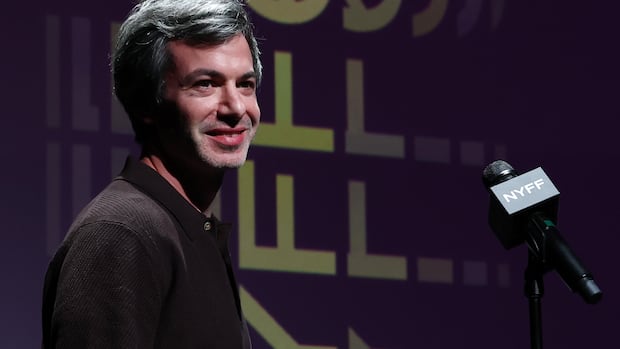

If you’re familiar with Nathan Fielder, you likely know that, in his famously patriotic manner, he has stated he “graduated from one of Canada’s leading business schools with excellent grades.”
This assertion — albeit delivered in an outrageously humorous style during the introduction of his show Nathan for You — is indeed accurate: The Canadian comedian earned his bachelor of commerce from the University of Victoria before transitioning to the show, which is renowned for its absurdly comical business tips.
It might appear peculiar to link a Canadian business education to intense explorations and unparalleled achievements. Nevertheless, this background has set a precedent for Fielder, who was born in Vancouver. From the outset of his comedic career, he has developed a unique field of study centered on the elusive nature of truth.
Almost all of his projects have been influenced by this theme, spanning from his early involvement with CBC’s This Hour Has 22 Minutes to the wildly unconventional The Curse and The Rehearsal, culminating in the current most talked-about documentary: the Elizabeth Holmes-focused You Can See Everything, which debuted last Friday.
Although these releases may appear strange, they have cultivated a niche market around Fielder, who is perceived as reshaping the documentary format. The film was produced with an agile, compact crew of around seven members, many of whom, like Fielder, originate from Canada. Considering the documentary tradition in Canada — coupled with the fact that this time, he has collaborators — the film’s success may not be so surprising after all.
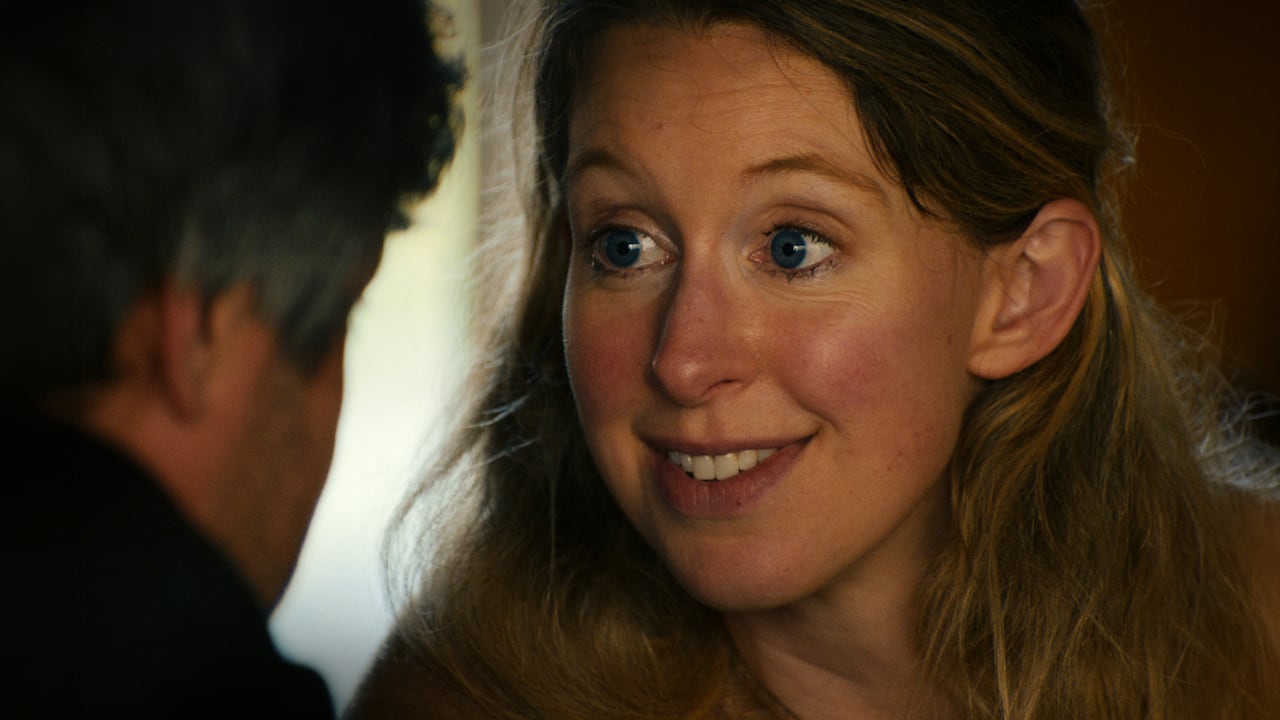
Elizabeth Holmes, founder of Theranos, is featured in a still from Nathan Fielder’s thought-provoking documentary You Can See Everything. (A24)
Remarkable Achievement
The most notable Canadian featured in You Can See Everything is undoubtedly Fielder himself. He gained prominence through his show, Nathan for You, a Comedy Central extension of a segment he crafted on 22 Minutes.
That original series prompted the documentary’s co-director, Lance Oppenheim, to reach out to Fielder about collaborating on a project, as reported in an interview with Vulture.
Following that, Oppenheim and Fielder enlisted their respective teams. On Fielder’s side, this included Adam Locke-Norton, the editor he had previously worked with on short films like Morris, Flashback, and Eves, which were released on YouTube in 2006.
On the other hand, Oppenheim assembled his own group, supported by talent from Canada. This included producer Tatiana Bears, who is from Ottawa and stated to CBC News that she was on-site just 24 hours after receiving Oppenheim’s call to begin filming. Additionally, David Bolen, a Toronto native who served as the cinematographer for Oppenheim’s narrative debut Primetime and previous “documentary fantasy” projects such as Spermworld and Some Kind of Heaven, was also part of the crew.
Bolen’s cinematography is a particularly intriguing element of You Can See Everything, generating a significant amount of its Oscars buzz.
-
REVIEW
Nathan Fielder’s You Can See Everything explores the depths of Elizabeth Holmes
-
Director Alex Gibney discusses chilling Musk documentary: ‘It’s not a funeral; it’s a warning’
Further down the list are additional contributors: Saskatchewan’s Katina Danabassis was responsible for costumes. Vogue Philippines referred to her as “one of A24’s most radical collaborators,” with a portfolio that includes fellow Canadian Celine Song’s Materialists and Past Lives, as well as Fielder’s The Curse and this year’s The Drama.
Additionally, Ontario filmmaker Stephen Coleman — who has previously contributed to A24 projects like Materialists, The Drama, and the upcoming Jesse Eisenberg film The Debut — served as second assistant director.
These individuals are now among those listed in A24’s Oscars campaign for consideration: Danabassis for best costume design, Bolen for best cinematography, Bears for the highly sought-after best picture, and Locke-Norton for best editing. Fielder and Oppenheim are nominated for best director.
A24 is also putting forth You Can See Everything in the documentary category, while also aiming for a historic achievement with a best picture nomination: If successful, it would mark the first documentary to be nominated in that category.
Canadians in the Film Industry
The trend of Canadians entering Hollywood productions is certainly not new. The U.S. has become an appealing refuge for well-trained Anglophone Canadian creatives in light of the absence of a robust domestic industry. However, A24, which financed You Can See Everything, has been making strides to serve as both a home and a source of Canadian talent.
The distribution company responsible for films like Backrooms, Everything Everywhere All at Once, and Moonlight is known for its experimental approach, having enough confidence in Fielder’s vision to sign a contract that allowed him to terminate the project at any time without repercussions.
Earlier this year, the studio released Undertone, a low-budget horror film shot in Toronto by Montreal director Ian Tuason, which went on to earn over $20 million USD globally. They also acquired the Anthony Bourdain biopic Tony, directed by Canada’s own Matt Johnson. That film had a surprisingly strong debut with $5 million USD wide release, following a limited release, and ultimately grossed nearly $20 million USD worldwide.
This foray, however, has not been without its challenges. Along with a perceived shift away from risk-taking in independent projects, A24 recently faced criticism after pulling the Canadian-directed Tony from an independent Toronto theater over a “clearance issue.” This practice, managed by distributors and perpetuated by the market dominance of larger cinema chains, prevents smaller theaters from screening the same film as nearby larger venues.
Nonetheless, a potential pivot toward Canadian talent could resonate well during awards season. Historically, Canada has demonstrated considerable prowess in the realm of documentary filmmaking at the Academy Awards.
The term “documentary” was initially coined in 1926 by critic John Grierson, who later founded Canada’s National Film Board. Meanwhile, the Quebec-shot 1922 film Nanook of the North is frequently recognized as the first feature-length documentary. Despite the fact that many scenes were staged, the early contributions have blossomed into a legacy of consistent success at the Oscars.
The first Canadian documentary feature to receive a nomination was producer Guy Glover’s The Stratford Adventure at the 1955 ceremony. The first win for a Canadian documentary feature occurred in 1976 with The Man Who Skied Down Everest, followed by CBC’s Just Another Missing Kid in 1983 and, most recently, a wholly Canadian production with Artie Shaw: Time Is All You’ve Got, which tied for a win in 1987.
Nominations have become more common: as recently as Julian Brave NoiseCat’s Sugarcane (co-directed with Emily Kassie) for the 2025 ceremony and Nisha Pahuja’s To Kill a Tiger at the 2024 awards. Numerous other Canadian films have also reached the Academy, including Daniel Roher’s 2022 documentary Navalny, as well as the 2002 Michael Donovan co-produced Bowling for Columbine.
In the best documentary short category, Canadians have an even stronger representation: since 2011, at least ten Canadian films have been nominated, with four of them winning. In contrast, no entirely Canadian film has ever been nominated for or won best picture — although Canadian filmmakers James Cameron and Paul Haggis have won for their respective works, Titanic and Crash.
In the international category, where Canada is more consistently competitive, only Denys Arcand has achieved victory: for The Barbarian Invasions in 2004 (when it was known as best foreign language film).
Tag: rewrite-pending