

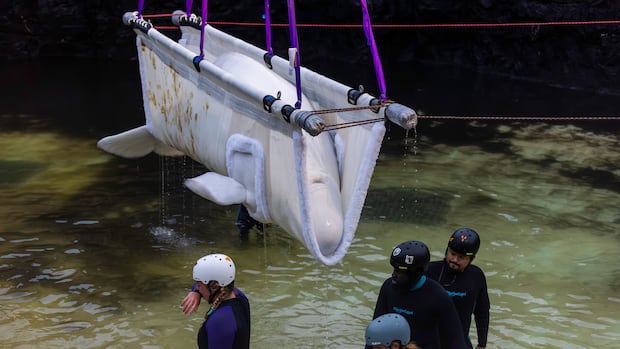

A few months following a significant relocation initiative that spanned the Atlantic, six out of the 30 whales moved from the now-closed Marineland theme park in Niagara Falls, Ontario, have passed away.
The latest loss, a beluga named Cyprus, was reported by SeaWorld San Diego on Sunday. This facility is one of five in the U.S. and Spain that took in the marine animals after Marineland stated it could no longer provide adequate care for them.
The recent fatalities have sparked concerns regarding the effects of the transfers on the whales’ health and welfare, as well as whether they were adequately prepared for travel. Additionally, it has reignited worries about the living conditions they endured during their time at Marineland.
But was there ever a viable alternative for the last whales and dolphins held captive in Canada?
Organizations such as Animal Justice have criticized both federal and provincial governments, along with Marineland, for their failure to effectively plan for the animals’ futures. Experts have expressed concern that these deaths may just be the beginning. In contrast, the Department of Fisheries and Oceans asserts that the transfers constituted the best possible rescue strategy.
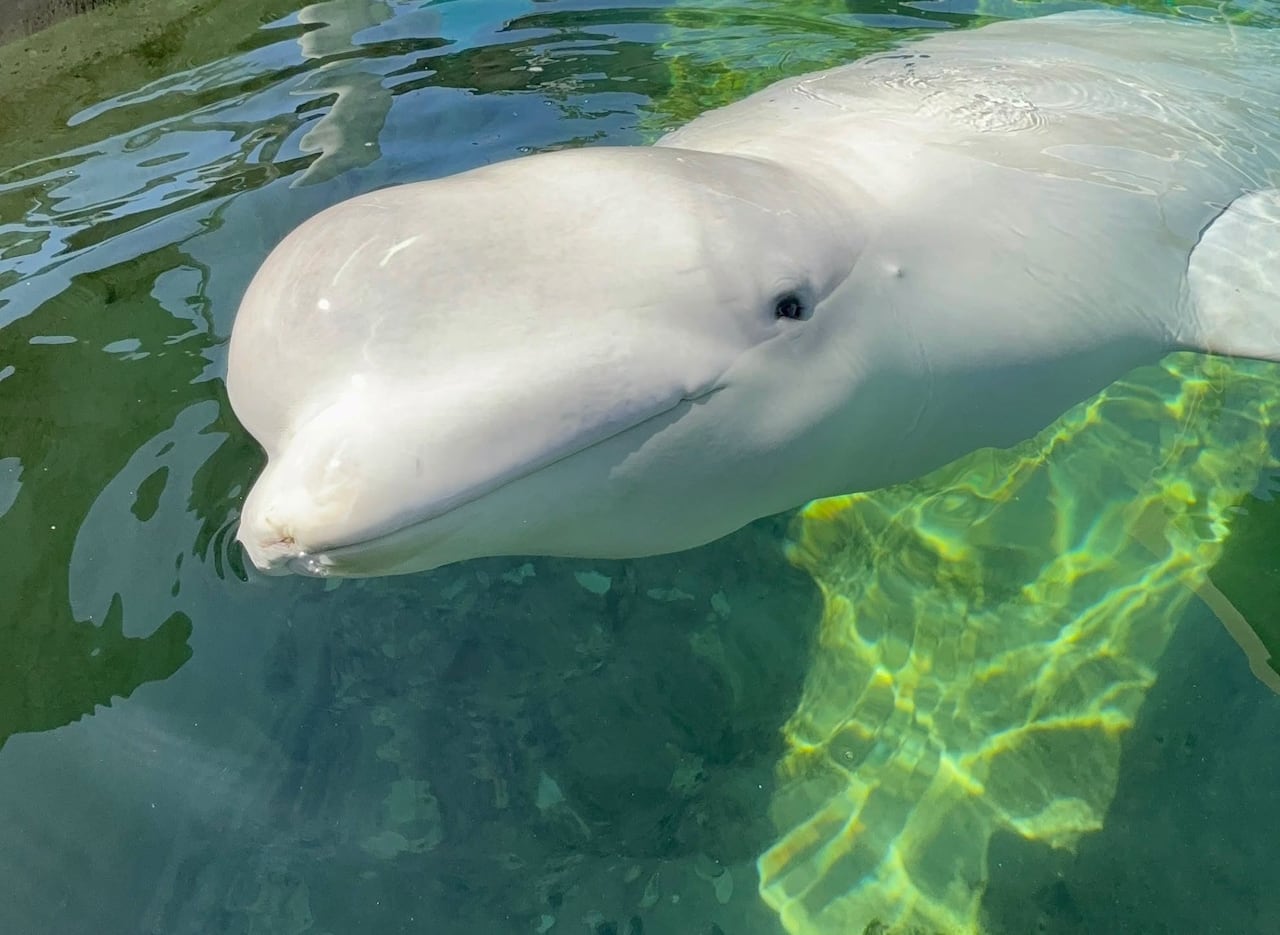
Cyprus, a beluga whale who was rescued from Marineland in Niagara Falls in August, is shown in an undated photo published to social media by SeaWorld San Diego. SeaWorld announced the whale’s death on Oct. 18. (SeaWorld San Diego/Facebook)
Dr. Doug Whiteside, the chief veterinarian at the Calgary Zoo and a member of the Canadian Veterinary Medical Association’s animal welfare committee, told CBC News, “This was, I would say, almost kind of a Hail Mary effort in terms of trying to make sure that we could provide a better life for these whales.”
According to Whiteside, the whales were already experiencing chronic stress due to the conditions at Marineland. The relocation further exacerbated this stress, despite adherence to international regulations and their placement in high-quality facilities for continuous care.
“Is it a risk? Absolutely … any sort of acute stress may push them over the edge,” he remarked.
While the stress of the transfers on the whales cannot be overlooked, it is still essential to consider their best interests in attempting to provide them with a better life, stated Angela Fernandez, director of the Animal Law Program at the University of Toronto’s law faculty.
Fernandez explained to CBC News, “People knew that there were stronger and weaker individuals in the mix, just like there would be among a group of 30 human retirees.”
“You wouldn’t evacuate an old-age home and take only the strong individuals if there was capacity to take everyone.”
Marineland transported 34 of its remaining belugas and dolphins to aquariums in the U.S. and Spain over the summer to spare them from euthanasia. But four belugas and one dolphin have since died in their new homes. On Friday, Chicago’s Shedd Aquarium released post-mortem details around the deaths of two belugas, indicating the whales were already sick with ‘significant gastrointestinal disease.’ Necropsy results are still being processed for the other dead animals. CBC News reached out to Marineland for comment but didn’t hear back at the time of publication.
CBC’s Puneet Nijjar explains how the animals got to this point and what scientists suggest could have led to their early deaths.
What happened to Marineland?
Marineland, once the most visited amusement park in Canada, has faced ongoing criticism from animal rights advocates and others strongly opposed to its practices.
A federal law enacted in 2019, which prohibits the keeping of whales, dolphins, and porpoises for breeding or entertainment in Canada, effectively dismantled its business model. The park struggled to recover from the decline in tourism caused by the COVID-19 pandemic.
In 2024, the park was put on the market and began relocating many of its inhabitants. However, in 2025, the federal government denied Marineland’s request to send the remaining belugas to an aquarium in China. Marineland subsequently sought emergency funding from Ottawa, cautioning that it might have to resort to euthanasia for the animals otherwise.
Experts noted that releasing the animals into the wild would likely result in certain death for those raised in captivity. Furthermore, there were no suitable seaside sanctuaries available in North America. A proposed sanctuary in Nova Scotia remained years away from completion.
In May, the Department of Fisheries and Oceans approved a rescue plan that involved dividing all remaining whales between Oceanogràfic València in Spain and four U.S. facilities: Georgia Aquarium in Atlanta, Shedd Aquarium in Chicago, and two SeaWorld locations in San Diego and San Antonio, Texas.
By the end of August, the last whale had been relocated.
Camille Labchuk, executive director of Animal Justice in Toronto, stated that this situation was completely avoidable. She emphasized that the advocacy group had long pushed for a proactive strategy to transition the whales to a seaside sanctuary, adding that there was still time for responsible planning after the 2019 legislation was enacted.
“It was clear to everyone that Marineland would eventually close, as the public no longer wishes to see miserable whales swimming in circles in cramped tanks,” Labchuk commented.
“Establishing a seaside sanctuary would always be a challenging endeavor, but these difficulties do not excuse the lack of planning for a better alternative.”
Concerns about fitness to travel
Since the transfers, four whales have died at Shedd Aquarium in Chicago, one whale and a dolphin at Oceanogràfic València, and another whale at SeaWorld San Diego, totaling one-fifth of the rescued animals.
The first to pass away, Peekachu, died on August 25, shortly after arriving in Chicago. Rain followed on September 2, and Osiris on September 21, both at Shedd. Necropsies performed on Peekachu and Rain, along with preliminary results for Osiris, revealed pre-existing intestinal and liver issues that began prior to their rescue, according to the aquarium’s blog.
Jelly Bean died on September 17 at Oceanogràfic València, and Echo, a dolphin, passed away at the same facility on September 23. They had been suffering from a series of health complications and organ abnormalities that may have developed before the transfer, as stated in a news release from the aquarium.
-
Animal Justice urges investigation into Marineland beluga death in Chicago, wants relocation efforts halted
-
Marineland belugas that died in Chicago had chronic inflammatory disease, preliminary necropsy findings show
On October 9, Shedd announced the death of Caspian two days prior, mentioning concerns about her health for several weeks. The aquarium has yet to disclose her necropsy findings. Cyprus, the sixth unfortunate beluga, passed away over the weekend; SeaWorld San Diego stated that an ultrasound showed that the whale’s intestinal tract appeared to be malfunctioning.
There was limited transparency regarding the condition of the whales and dolphins before their relocation due to their private ownership, noted Fernandez from the University of Toronto. “After years and decades in captivity, it would be surprising if they didn’t all have significant health problems.”
The fatalities raise concerns about whether the animals were fit for travel and if all possible precautions were taken, Labchuk stated, stressing the need for transparency for the public.
‘Heartbreaking,’ says former trainer
Kristy Burgess, a former trainer at Marineland from 2022 to 2025, described the deaths as “heartbreaking.”
Burgess previously spoke out regarding the conditions at Marineland, highlighting that the beluga pools were in dire need of repair and that the whales were consuming paint that was peeling off the walls.
She now wishes there had been more opportunities for independent experts to participate in the decision-making process, as well as increased transparency concerning planning, risks, and the ongoing health of the animals.
“Change must be accompanied by a realistic, well-considered plan for the animals themselves,” Burgess remarked.
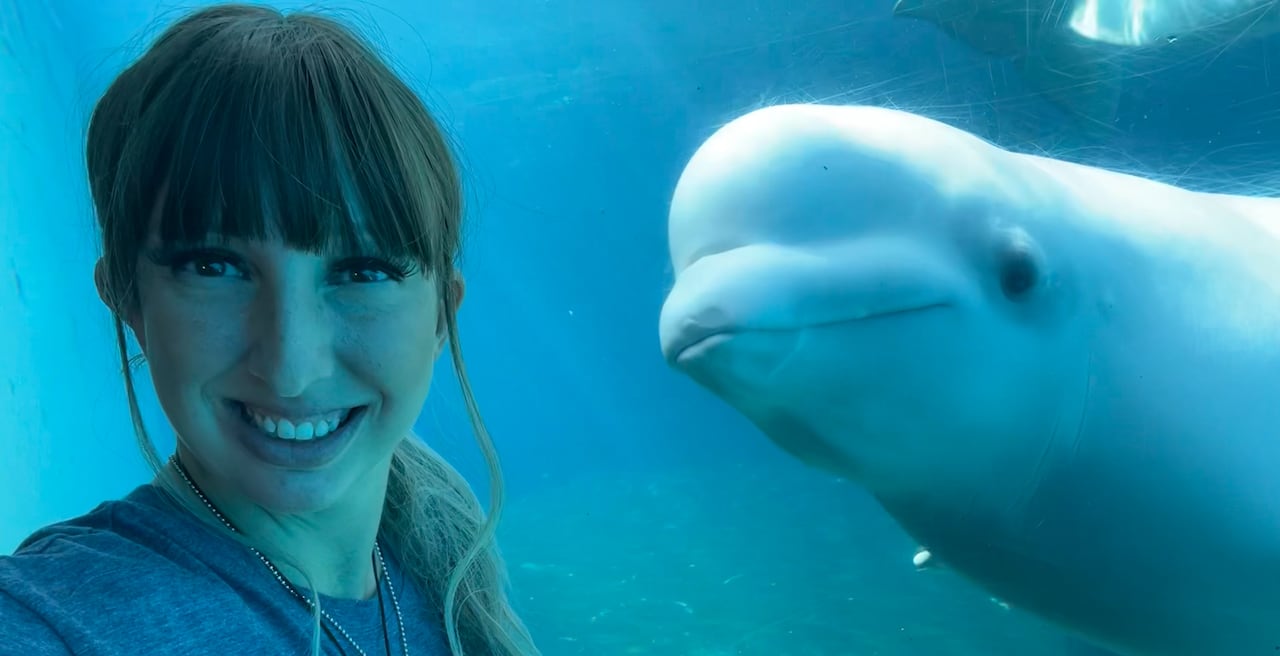
Former Marineland trainer Kristy Burgess says the beluga pools were in desperate need of repair and the whales were eating paint peeling off the walls. (Submitted by Kristy Burgess)
Whiteside, the head veterinarian at the Calgary Zoo, stated that his understanding is that there simply wasn’t a better alternative available.
He added that the belugas were in a “horrible situation” crowded in deteriorating pools at Marineland.
According to him, at least a transfer provided them with a chance for an improved life, even if some did not survive.
Whiteside remarked that this situation serves as a tragic illustration of what can occur when institutions like Marineland are not held accountable.
By failing to be held responsible, Marineland allowed the animals to reach a state of chronic stress, overcrowding in pools, and eating paint, he explained.
“Right from the get-go, this sets you up for potential failure.”
‘Their best chance of survival’
Prior to the animals’ relocation, federal Fisheries Minister Joanne Thompson stated that she had taken appropriate measures to ensure their safety, including conducting individual health assessments for each animal.
In a statement to CBC News on Wednesday, Thompson expressed continued confidence in the rescue plan, emphasizing that the transfer represented “a significant and complex undertaking.”
“Marineland was no longer capable of caring for these animals. I remain confident that this rescue plan provides these belugas their best chance of survival and that they are being looked after by dedicated professionals who are deeply committed to their welfare,” she stated.
Experts and advocates who spoke with CBC News are now concerned about the fate of the remaining whales from Marineland.
“It’s almost certain that more belugas and dolphins will die,” Labchuk from Animal Justice warned.
However, Fernandez noted, “that means 24 are safe, at least for now.”
CBC News has contacted Marineland for a response but has not yet received any comment.
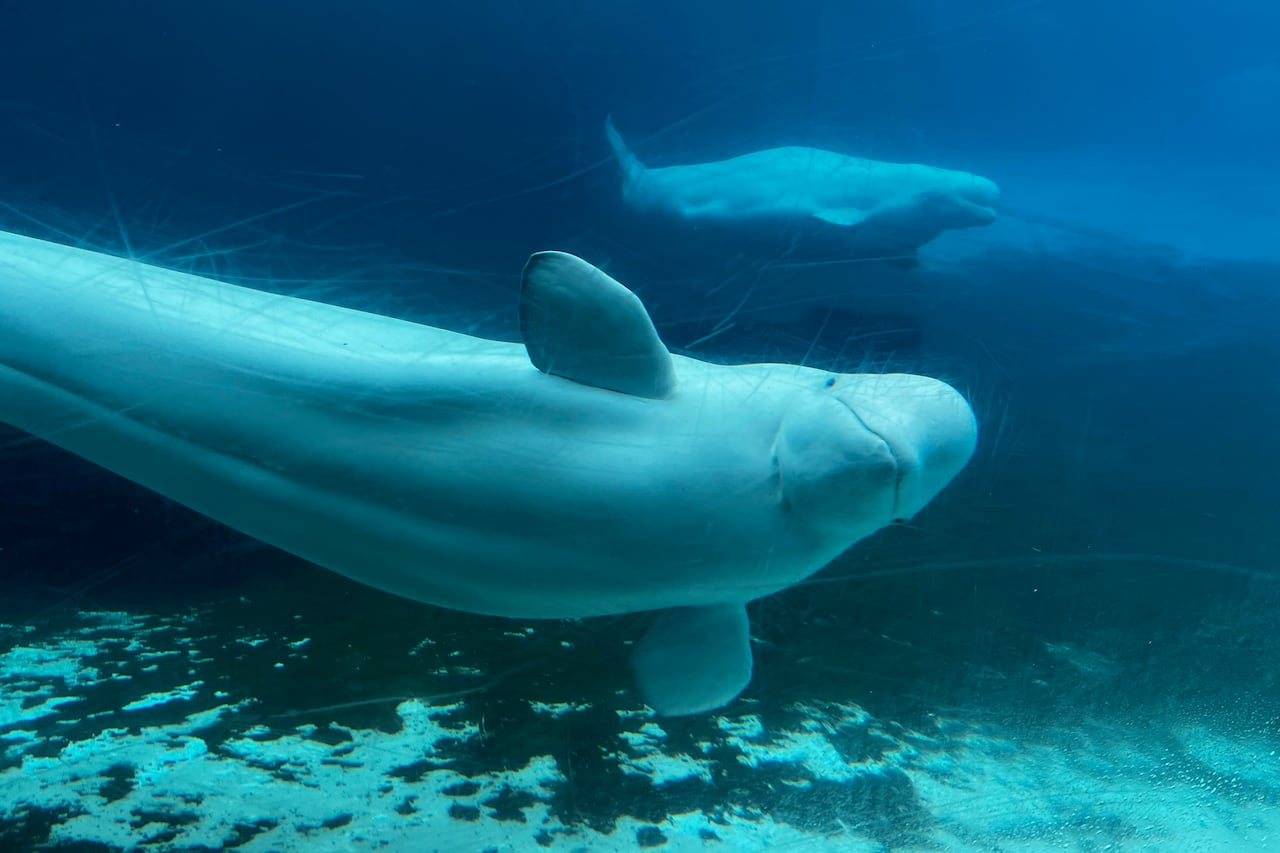
Beluga whales swim in a tank at Marineland in Niagara Falls on June 9, 2023. (Chris Young/The Canadian Press)