

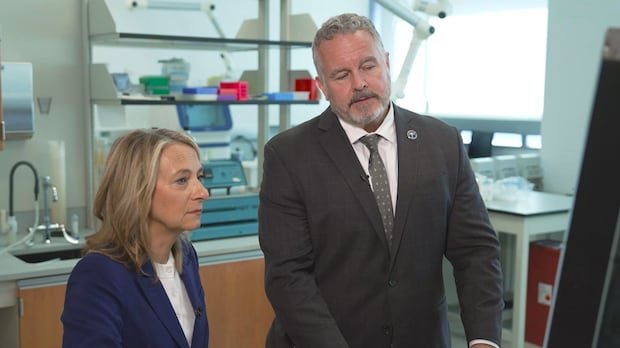

In a Manhattan laboratory, forensic experts in white lab attire are diligently continuing their commitment made 25 years ago. Their focus remains on extracting DNA from numerous human remains retrieved after the World Trade Center terrorist attacks, aiming to match them with DNA samples from personal belongings like toothbrushes and razors provided by victims’ families. The techniques and forensic methods employed have evolved significantly since 2001.
Mark Desire, the assistant director of forensic biology at the New York City Office of the Chief Medical Examiner, expressed the profound impact of identifying and reuniting loved ones with their families after years of scientific advancements. Despite their efforts, 40% of the 2,753 individuals who perished at Ground Zero, including around 10 Canadian victims, are yet to be identified.
Recently, the laboratory achieved its first identification of previously unidentified remains using an innovative approach that combines DNA testing with genetic genealogy. This breakthrough technique has sparked hope for more identifications in the future, as stated by Dr. Jason Graham, the Chief Medical Examiner of New York.
The excavation and preservation of remains at the World Trade Center site have posed significant challenges due to various factors like fire, water, jet fuel, and other destructive elements. Despite the completion of the excavation work in 2002, ongoing efforts have led to the recovery of approximately 22,000 pieces of human remains since 2001.
While early identification methods relied on fingerprints, dental records, and basic DNA technology, advancements have enabled more extensive DNA extraction from bone fragments. However, extracting DNA from bone material remains a challenging task, with bone being the most resilient material for DNA retrieval.
The introduction of a new technique involving genetic genealogy offers renewed hope in identifying remains that have not matched any reference samples provided by families. The medical examiner’s office is encouraging families to provide samples to aid in making further matches.
Despite the ongoing identification efforts, some families of victims whose remains have not been found may choose not to receive notifications upon potential matches. The emotional toll of such revelations is acknowledged by professionals like Jennifer Odein, the World Trade Center anthropologist, who respects families’ decisions regarding notifications.
Individuals like Abigail Carter, who lost her husband in the attacks, have found their unique ways to honor and remember their loved ones. Carter’s decision not to seek information on her husband’s remains exemplifies the complex nature of grief and remembrance. Similarly, Monica Iken-Murphy hopes for her husband’s identification while preferring his remains to be kept at the 9/11 Memorial and Museum.