

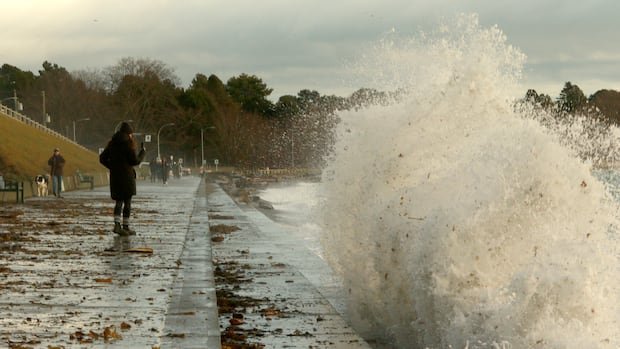

A massive underwater wave associated with this year’s El Niño weather phenomenon is progressing northward along the western coast of the Americas, sparking concerns among scientists about how climate change is amplifying the effects of this natural occurrence.
Known as the Kelvin wave, its presence is not unexpected. However, alongside El Niño, it is occurring amid human-induced climate change, which has already heated the oceans and atmosphere.
An earlier, smaller wave reached British Columbia earlier this summer, with another wave anticipated to arrive within the next one to two weeks, as explained by Bill Merryfield, a research scientist at Environment and Climate Change Canada.
The Kelvin wave, like El Niño, is a natural weather event. In typical years, Pacific Ocean winds move from east to west along the equator, pushing water from South America towards Asia. During El Niño years, these east-to-west winds weaken or reverse, enabling water to shift eastward.
When these Kelvin waves hit the South American coast, they split and travel along the coasts of the Americas, eventually reaching Canada, according to Merryfield. Data from sea-level monitoring at Tofino on Vancouver Island demonstrated the impact of the previous Kelvin wave in June.
Rather than causing a massive tsunami-like wave, the Kelvin wave temporarily elevates sea levels, creating a broad, shallow bulge across the ocean’s surface, explained University of California climate scientist Daniel Swain.
Merryfield highlighted that the most significant impacts occur during high tides, particularly king tides, when sea levels rise due to the combined gravitational forces of the sun and moon. The additional sea level rise from El Niño, coupled with king tides and potential winter storms, could lead to heightened risks.
The compounding effects of the Kelvin wave, intensified northward winds, and climate change-induced sea level rise could exacerbate flooding and erosion along the coast, mirroring past scenarios in California. Authorities are already taking precautionary measures, such as adding emergency sand to beaches.
Merryfield cautioned that the effects of the Kelvin wave and El Niño could extend beyond the current season. The release of stored heat from the oceans during El Niños may contribute to 2027 being potentially the warmest year on record.
These warnings align with projections from various climate research organizations and scientists, indicating the far-reaching impacts of El Niño and the Kelvin wave phenomenon.