


Ukraine’s Recent Drone Attacks Create Strain on Russia’s Energy Supply
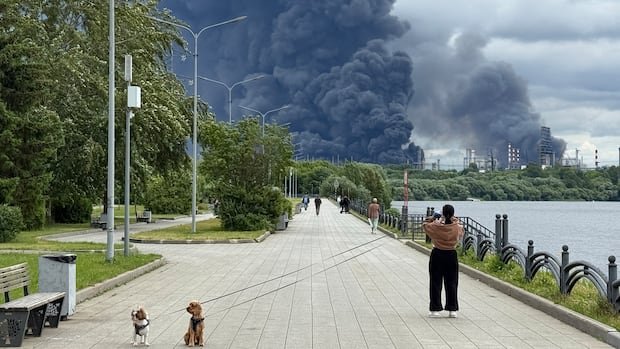
As Ukraine executed its most significant assault on Moscow, targeting a major refinery and causing billows of thick black smoke over the city, the impact of Kyiv’s escalating drone campaign was keenly felt by many Russians even before the attack. In Crimea, which Russia annexed illegally in 2014, the appointed governor imposed a nighttime prohibition on motorcycles and scooters due to their resemblance to the drones frequently buzzing overhead.
The peninsula experienced fuel shortages, empty pumps, and restrictions following Ukrainian strikes aimed at disrupting supply routes. Although Moscow has not yet encountered fuel scarcities, experts note mounting pressure on Russia’s energy sector as Ukraine directs the conflict closer to the country through various strikes.
Oleksandr Kharchenko, Director of the Energy Industry Research Center in Kyiv, emphasized the need for Moscow residents to influence the war’s outcome, stating that only they have the power to halt the conflict. Meanwhile, as Ukraine deployed approximately 200 drones to target Moscow and its vicinity, Russian President Putin was hosting leaders from Southeast Asian nations in Kazan, over 700 kilometers away from the capital.
The assault on Moscow resulted in injuries, including the tragic death of an eight-year-old girl, as drones damaged buildings, a mall, and caused chaos in the city. The refinery, owned by Gazprom Neft, which supplied nearly 40% of the capital’s fuel, was struck twice this week, leading to disruptions in the fuel supply chain.
Igor Sechin, CEO of Rosneft, acknowledged the challenging conditions in Russia’s fuel market, attributing them to high seasonal demand and unscheduled refinery operations. He assured the public of fuel supply to essential facilities, industrial sectors, and agricultural enterprises, with minimal restrictions on gas station refueling.
In Crimea, fuel rationing has been enforced due to repeated attacks on transportation infrastructure and fuel tankers. Reports of shortages have also emerged in regions like Dagestan, prompting Russia, the world’s third-largest oil producer, to consider importing fuel from Asia to address the scarcity.
According to Kharchenko, the recent drone attack initiated a fuel deficit in Russia, although sustained impacts would require further strikes on the country’s energy infrastructure over the next four to six weeks. Ukrainian manufacturer Fire Point showcased the Moscow strikes at a defense convention in Paris, emphasizing the shift in the conflict to the Russian capital and critical logistical routes in occupied Ukrainian territories.
Denys Shtilerman, Fire Point’s co-founder, highlighted the impact on Russia’s military supply chain, noting the challenges faced by the Russian army in food and medicine delivery. As pressure mounts on Russian forces, Ukraine continues to target strategic energy sites and logistics, intensifying the conflict and disrupting Russia’s operations.