

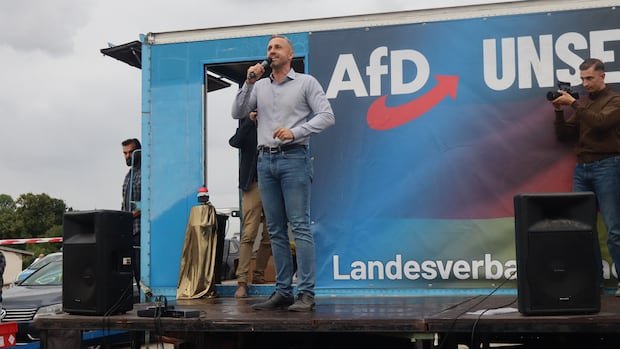

On a sunny August day in the peaceful town of Quedlinburg in eastern Germany, a large crowd gathered to listen to a prominent far-right figure discuss the nation’s future. Many arrived on their Simson motorcycles, a symbolic representation for the Alternative for Germany (AfD) party, to meet Ulrich Siegmund, the AfD’s candidate for leading the eastern state of Saxony-Anhalt. With the party surging in polls, there is anticipation that in an upcoming regional election, it could potentially become the first far-right party to govern a state in Germany since World War II.
Experts suggest that if the AfD secures power, it would have considerable influence over state resources, particularly in education. The party aims to implement initiatives such as segregating classrooms for refugees, fostering ties with Russia through student exchange programs, and promoting a nationalist agenda that shifts focus away from the country’s Nazi history.
During the gathering in Quedlinburg, 17-year-old Luca Stemmler expressed admiration for Siegmund, stating, “I think [Siegmund] speaks from his heart, from our hearts. He’s an idol for me.” Meanwhile, across the street, counter-protesters displayed rainbow flags and sang “All You Need Is Love” by The Beatles as a gesture of solidarity against the AfD, which some fear could threaten fundamental human rights and alter key aspects of Germany’s democratic structure.
In Saxony-Anhalt, the AfD leads in opinion polls with 42%, according to research firm Infratest-Dimap. Nationally, the party holds a 28% approval rating and secured the second highest number of seats in the 2025 federal election. Originating as an anti-Euro movement in 2013, the AfD shifted its focus to migration issues in 2015 amidst Chancellor Angela Merkel’s acceptance of numerous refugees into Germany.
The party’s agenda includes advocating for “remigration,” restricting immigration from select non-EU countries, establishing detention centers for deportees, and setting up separate classrooms for refugee children. These policies have drawn mixed reactions, with immigrants like Akinola Sanyaolu from Nigeria experiencing racism in Saxony-Anhalt but striving to remain optimistic about his future in the country.
The AfD’s rise is not without controversy, with the party labeled as right-wing extremist by the state’s Office for the Protection of the Constitution. Party members have faced criticism for rhetoric associated with Nazi ideologies and alleged ties to far-right movements. Concerns have been raised about the party’s connections to Russia and its potential impact on domestic intelligence services if granted state power.
As the AfD gains popularity, there are concerns about its implications on Germany’s political landscape. The party’s potential success in Saxony-Anhalt could boost its influence at the federal level, challenging mainstream parties and normalizing its presence in German politics. Despite constitutional safeguards, experts caution that an AfD victory could still disrupt legislative processes and signal broader shifts in the nation’s political climate.