

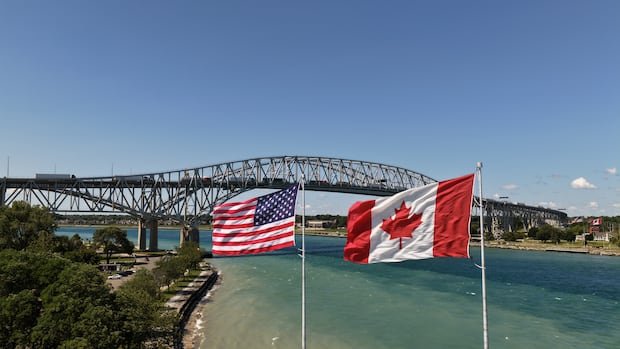

A business owner in Thunder Bay expressed frustration over the recent developments in the trade conflict between Canada and the United States. Following the breakdown of negotiations, the U.S. imposed 50% tariffs on various Canadian goods, prompting Canada to announce retaliatory tariffs after Labour Day. President Donald Trump announced plans to raise tariffs on Canadian cars, trucks, auto parts, and steel to 50% starting January 1st, leading to feelings of frustration and confusion among business owners like James Foulds of Border Giant in Thunder Bay.
Foulds, whose company facilitates imports and exports between Canada and the U.S., is helping clients navigate the impact of the new tariffs, particularly those manufacturing goods in Thunder Bay. He is exploring ways to mitigate the effects of tariffs, such as adjusting product materials to potentially avoid them. However, uncertainty looms due to the impending Canadian retaliatory tariffs, leaving businesses in a state of limbo until further details are disclosed.
Foulds emphasized the need for government support for small businesses transitioning away from U.S. markets. The increased shipping costs to other regions like Europe and Asia pose challenges for these businesses. Charla Robinson, President of Thunder Bay’s chamber of commerce, backed Prime Minister Mark Carney’s decision to walk away from what was deemed a disadvantageous deal for Canada’s interests.
Robinson noted that the immediate impact of the tariffs on local businesses exporting to the U.S. is limited, but businesses are awaiting more information on the Canadian government’s retaliatory measures. The ongoing uncertainty has put businesses in a holding pattern, awaiting clarity on the evolving situation.