

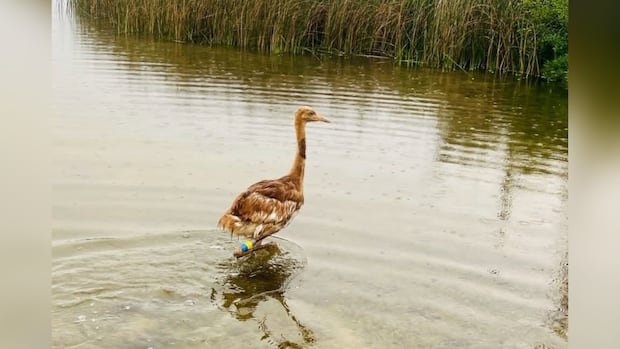

Approximately 40 whooping crane chicks have been born in Wood Buffalo National Park after a recent wildfire threatened their habitat and nesting areas. Parks Canada officials have managed to tag around 20 of the chicks with bands and tracking devices. Nicolas Comerford, an ecologist at Parks Canada, noted the season began positively with a high number of nests recorded in May. However, the situation quickly changed as wildfires started in May and continued to grow throughout the summer.
The whooping cranes, an endangered species with a population of around 550 in the wild, faced additional challenges due to an ongoing drought. The lower water levels resulting from the drought exposed the nests to predators and forced the birds to travel further in search of food, putting their eggs and hatchlings in jeopardy. Comerford mentioned the observations made by Ernie Kuyt, a prominent biologist known for his contributions to saving the whooping cranes from extinction, about the impact of low water levels on the birds’ nesting season.
Out of the 119 nests observed, the 40 hatchlings represent a productivity rate of approximately 34%. Comerford highlighted the variability in breeding productivity, ranging from 25% to 80% over the years, which is largely influenced by the water levels during the season. The wildfires this year posed an additional threat, with some nests escaping unscathed while others were abandoned or destroyed.
As part of their conservation efforts, Parks Canada staff swiftly captured and banded the chicks. The time-sensitive process involved ensuring the health of the chicks and releasing them back into their natural habitat promptly. Meanwhile, Ronnie Schaefer, a resident of Fort Smith known for his dedication to the whooping cranes, was touched to learn that one of the juvenile cranes would bear the name “Chickie” in memory of his late wife, Cindy. Schaefer expressed gratitude for the gesture and eagerly anticipates tracking Chickie’s progress as the cranes migrate south.
People can now report sightings of Chickie by identifying the unique color band (gray, yellow, and blue) on the bird. Schaefer expressed his deep appreciation for the tribute to his late wife, emphasizing his love and gratitude towards those involved in honoring her memory.
Listen to the Trailbreaker’s interview with Schaefer and Comerford for more insights on the challenges faced by the whooping cranes and the heartwarming story behind Chickie’s special name.