

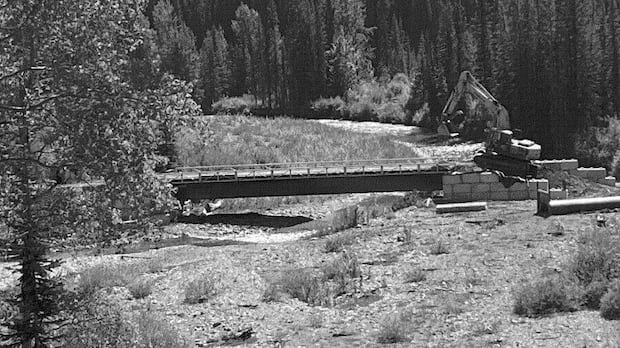

Some organizations are advocating for enhanced enforcement measures to safeguard endangered species in Alberta following a halt in an investigation by Fisheries and Oceans Canada (DFO) due to resource constraints. The DFO’s two-year probe into an unauthorized bridge constructed by Spray Lake Sawmills over the Highwood River in Kananaskis Country uncovered evidence suggesting a violation of federal law and disturbance to critical habitat for threatened bull trout, as revealed in internal documents obtained by CBC. However, due to limited resources, the federal department ceased its investigation to prioritize other cases, as indicated in internal emails.
Information obtained through access to documents revealed that DFO field staff on the ground recommended pursuing charges in the Highwood investigation during a site visit in 2023, where they observed the destruction of critical bull trout habitat. Despite efforts to push the investigation forward, the Edmonton office later advised discontinuing the probe to allocate resources to other matters, citing the significant resource requirements and the potential neglect of other cases if focus remained on the Highwood incident.
While expressing disappointment over the halt in the investigation, Josh Killeen, the conservation science and programs manager at Canadian Parks and Wilderness Society Southern Alberta, emphasized the crucial need for meaningful enforcement of existing laws governing species at risk. Violations of the federal Species at Risk Act can lead to substantial fines and penalties, with potential jail time for individuals or organizations found guilty.
Shaun Fluker, the executive director of the Public Interest Law Clinic at the University of Calgary, highlighted the importance of enforcement actions under the Species at Risk Act, emphasizing that the effectiveness of the law hinges on rigorous enforcement efforts. The lack of proactive field visits or surveys can render enforcement efforts ineffective, leading to challenges in upholding the legislation’s mandates.
The Highwood investigation, triggered by public alerts, underscored the reliance on external entities like non-profits and concerned citizens to initiate field visits, a responsibility that should primarily fall on Fisheries and Oceans Canada. Concerns were raised regarding the need for stronger enforcement actions by DFO to address issues such as erosion impacting critical habitat for native species, ultimately endangering their survival prospects.
The case drew attention to the need for more robust enforcement measures and a proactive approach from DFO to tackle environmental violations effectively. Challenges in enforcement and regulatory oversight were highlighted, with calls for a more stringent stance to protect endangered species and their habitats effectively.