

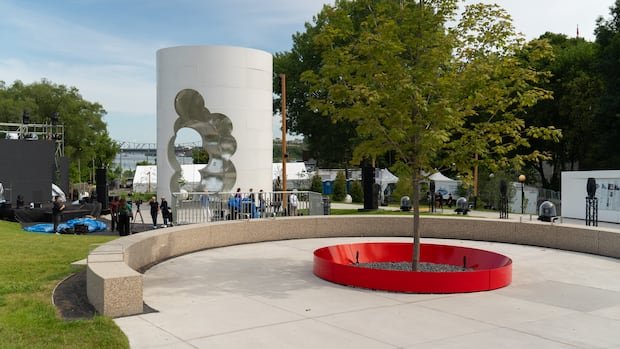

Thunderclouds loom near the Library and Archives Canada building in downtown Ottawa, signaling the imminent unveiling of a new national monument honoring the 2SLGBTQ+ community. Named Thunderhead, the monument stands as a striking nine-meter white column adorned with cloud-shaped openings.
Todd Ross, co-chair of the LGBT Purge Fund, described Thunderhead as a unique structure featuring inverted clouds within the pillar, accentuated by mirrored tiles that give the interior a vibrant disco ball effect. Situated close to the intersection of Wellington Street and the Portage Bridge, the monument and its surrounding park serve as a poignant reminder of the discrimination faced by 2SLGBTQ+ individuals across Canada, particularly during the era of the government’s LGBT purge campaign.
During the 1950s to the mid-1990s, the Canadian government conducted investigations and dismissed numerous employees from institutions such as the RCMP, Canadian Armed Forces, and federal public service due to their sexual orientation. Ross himself was honorably discharged from the navy in 1990 on grounds of being “not advantageously employable due to homosexuality.” Subsequently, Ross participated in a successful class-action lawsuit against the government, with the proceeds contributing to the funding of the monument’s construction.
Designed by a team led by Liz Wreford of Architects Public City, Thunderhead symbolizes both destruction and renewal through its representation of thunderclouds. The column’s architectural elements, including skylights and reflective surfaces, create a dynamic interplay of light and color, reminiscent of a thunderstorm.
The park surrounding the monument is designed to educate visitors about the history of anti-2SLGBTQ+ discrimination in Canada, featuring an interpretive wall detailing past injustices and a healing circle composed of stones selected by two-spirit elders from each province and territory.
Michelle Douglas, executive director of the LGBT Purge Fund, emphasized the park’s significance as a place for contemplation and commemoration, drawing on her own experience of being discharged from the Armed Forces in 1989. The site aims to serve as a living monument, acknowledging past hardships while looking towards a more inclusive future.
In addition to its symbolic value, the monument site includes spaces for performances and gatherings, reflecting a multifaceted purpose envisioned by the designers and advocates involved in its creation. As the official opening ceremony approaches, anticipation builds for an event that will mark a significant milestone in celebrating and honoring the 2SLGBTQ+ community.