

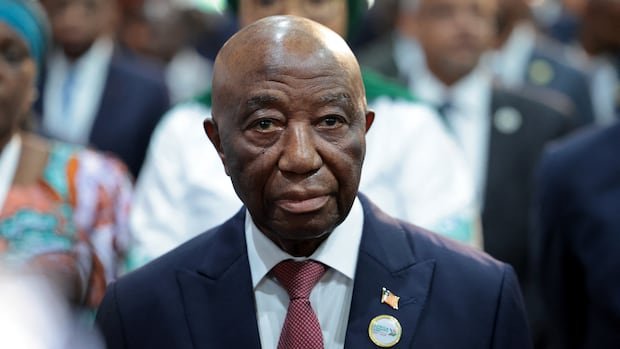

Liberia has reached an agreement to receive a maximum of 1,200 deportees from the U.S. over the next year, with an initial batch of 20 anticipated to land on Thursday, as announced by the government. The statement from the Liberian authorities on Tuesday specified that the deportees would consist of individuals from African and Western Hemisphere nations who have been medically cleared for travel. Specific details regarding the nationalities of the deportees were not immediately provided, with the U.S. State Department citing non-disclosure of such information.
Historically, the U.S. has adhered to the non-refoulement principle, which prohibits the return of individuals to countries where their human rights or safety could be at risk due to factors such as race, religion, or nationality. However, since the start of President Donald Trump’s tenure in January 2025, his administration has brokered agreements with numerous African nations and others globally to deport individuals who cannot be sent back to their home countries legally. These arrangements have faced criticism for lack of transparency, despite being defended by Washington as lawful and prioritized by the executive branch.
Immigration lawyers have raised concerns that the Trump administration exploits third-country deportations as a legal workaround, often leaving migrants in unfamiliar territories with limited options to return to their countries of origin. Liberian President Joseph Boakai was part of a delegation of West African leaders who met with Trump last year, during which Trump encouraged the acceptance of third-country deportees. Liberia clarified that the deportees would be treated as guests, free to depart at their discretion and could apply for asylum within Liberia without any demands for compensation from Washington.
Senate Democrats highlighted these deportation agreements as exploitative, pointing out that deals with certain countries had incurred significant costs to American taxpayers. Several African nations, including the Democratic Republic of Congo, Central African Republic, Cameroon, Ghana, and Sierra Leone, have also accepted U.S. third-country deportees.
In a broader strategy to reduce the foreign-born population in the U.S., the Trump administration has encouraged unauthorized residents to self-deport and recently revoked over 175,000 visas from foreign nationals. Judicial decisions have allowed the administration to terminate legal protections for various immigrant groups, including Ethiopians, South Sudanese, Myanmar nationals, and Somalis. These protections, granted under the Temporary Protected Status (TPS) designation, have been contested by the administration and some lawmakers as not intended for long-term residency, with arguments that asylum applications could have been pursued upon arrival.
Critics, including the U.S. Chamber of Commerce and the U.S. Conference of Catholic Bishops, have voiced concerns over the economic impact and humanitarian implications of ending TPS protections, emphasizing the potential negative effects on sectors like construction and healthcare amid demographic challenges.