

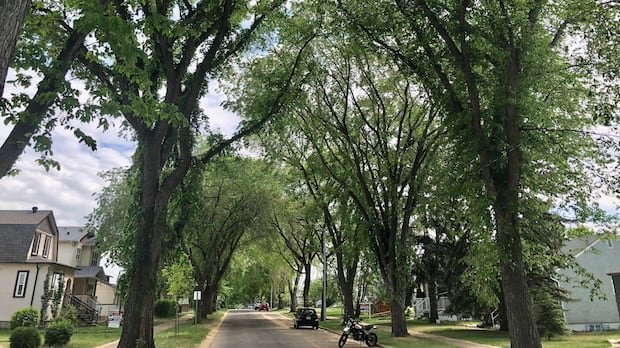

A specialist in forest health has raised concerns about the City of Edmonton’s current strategy in fighting Dutch elm disease, warning of potential long-lasting impacts on the city’s tree cover. Since 2024, Edmonton has documented 16 cases of the disease, with nine new cases identified this year. Elm trees constitute approximately 22% of the city’s tree canopy, predominantly American elm species known for their stately appearance and expansive canopies. Dutch elm disease, carried by bark beetles, disrupts the trees’ water transport system, leading to wilting and eventual demise.
Presently, Edmonton is primarily focused on removing infected trees. As a precautionary measure, healthy elm trees within a 20-meter radius of infected trees are also being removed. However, Professor Nadir Erbilgin from the University of Alberta suggests a different approach, advocating for the use of trap trees to target the source of infection—the bark beetles. This method involves attracting disease-carrying beetles to designated trap trees, which are then removed and incinerated to reduce the spread of the disease.
Erbilgin argues that the widespread removal of trees, a common practice in many North American cities, may result in the loss of more healthy trees than those affected by the disease, potentially including resistant trees. Mike Jenkins, a senior scientist with the City of Edmonton, acknowledged that the current approach led to the removal of healthy mature elm trees in Rossdale due to positive disease tests. However, enhanced surveillance efforts have enabled early detection and containment of the disease, with regular inspections of all elm trees.
Jenkins disclosed plans to introduce trap trees using Siberian elms in the upcoming year, as these trees have shown resistance to Dutch elm disease. As most Siberian elm trees are on private property, the city intends to focus on reducing deadwood that could harbor beetles. Residents are urged to participate in tree maintenance, with Sarah Mendonca of Trusty Tree Services recommending periodic inspections for signs of disease. Elm tree pruning is restricted between April and September in Edmonton, but complete tree removal is permitted during this period, with proper disposal at the Edmonton Waste Management Centre. Suspected cases of Dutch elm disease should be promptly reported to the city for appropriate action.